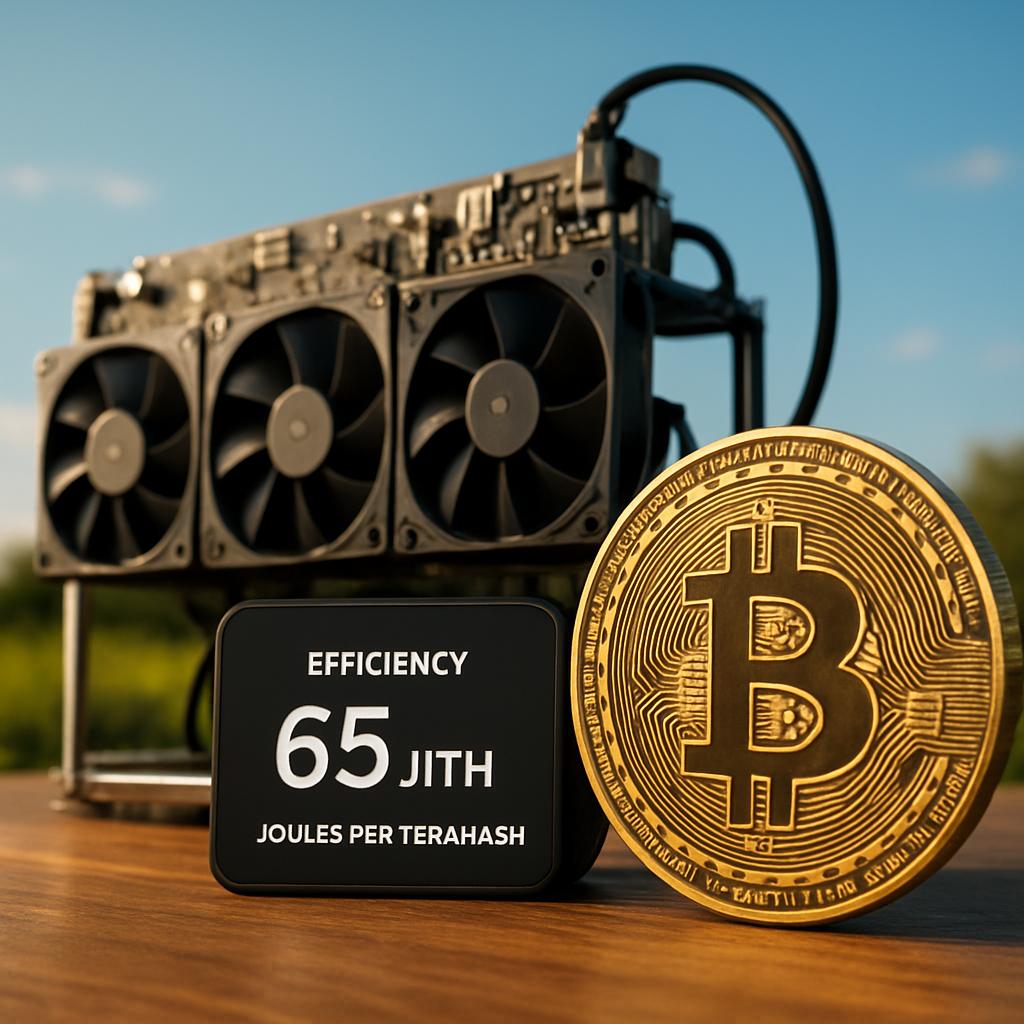
Bitcoin Mining Hardware Efficiency Metrics: Joules per Terahash
Table of contents
- What is Joules per Terahash in Bitcoin Mining Hardware?
- Why is Joules per Terahash Important for Bitcoin Miners?
- How to Calculate Joules per Terahash for Your Mining Rig?
- How Does Joules per Terahash Affect Bitcoin Mining Profitability?
- What are the Most Efficient Bitcoin Mining Hardware Models by Joules per Terahash?
- How to Improve Bitcoin Mining Efficiency Beyond Hardware?
- Frequently Asked Questions
Bitcoin mining hardware efficiency metrics play a crucial role in determining the profitability and sustainability of mining operations. One of the most talked-about efficiency metrics is “joules per terahash” (J/TH), which measures the energy consumption required to perform one terahash of computational work. Understanding this metric helps miners, investors, and enthusiasts gauge which mining rigs provide the best balance between power usage and hashing power, ultimately influencing hardware choices and mining strategies.
What is Joules per Terahash in Bitcoin Mining Hardware?
Joules per terahash quantifies the energy efficiency of Bitcoin mining machines by indicating how many joules of electricity are consumed to produce one terahash of hash rate. Since Bitcoin mining requires solving complex cryptographic puzzles, the computational work is measured in hashes, with terahashes representing one trillion hashes per second.
- Joule (J): A unit of energy consumption.
- Terahash (TH): One trillion hash computations per second.
- J/TH: Energy consumed to compute one terahash, lower values mean better efficiency.
This metric allows miners to compare different hardware models objectively, factoring in both power consumption and mining speed, which directly affects electricity costs—a major expense in mining.
Why is Joules per Terahash Important for Bitcoin Miners?
Energy costs often make or break a mining operation’s profitability since mining hardware runs continuously. Joules per terahash helps miners:
- Reduce Operational Costs: Lower J/TH means less electricity used per unit of hashing power.
- Increase Profit Margins: Efficient hardware generates more hashes for less energy, improving returns.
- Support Sustainability: Using energy-efficient miners contributes to lowering carbon footprints.
- Plan Hardware Upgrades: Comparing J/TH guides decisions on when to replace or scale mining rigs.
With electricity prices varying globally, miners in regions with high costs particularly benefit from hardware with optimized J/TH metrics.
How to Calculate Joules per Terahash for Your Mining Rig?
Calculating J/TH requires two key hardware parameters:
- Power Consumption (Watts): The electrical power the miner draws during operation.
- Hash Rate (Terahashes per Second): The speed at which the miner computes hashes.
The formula is:
J/TH = (Power Consumption in Watts) / (Hash Rate in TH/s)
Steps to calculate:
- Identify your mining rig’s power usage (often specified by the manufacturer).
- Note the hash rate in terahashes per second.
- Divide power consumption by hash rate to find joules per terahash.
For example, a miner consuming 3000 watts with a hash rate of 100 TH/s has:
3000 W / 100 TH/s = 30 J/TH
Lower values indicate better efficiency.
How Does Joules per Terahash Affect Bitcoin Mining Profitability?
Profitability depends on electricity costs, hardware efficiency, and Bitcoin’s price. J/TH directly impacts electricity consumption, which can be a significant portion of total mining expenses.
- Lower J/TH reduces energy bills, improving profit margins.
- Higher J/TH means more energy wasted per hash, reducing profitability.
- Efficient miners can stay profitable during periods of declining Bitcoin prices or rising electricity rates.
- Miners with inefficient hardware may struggle to break even when market conditions tighten.
Profitability calculations often include the J/TH metric alongside electricity price per kilowatt-hour and current Bitcoin block rewards.
What are the Most Efficient Bitcoin Mining Hardware Models by Joules per Terahash?
Mining hardware manufacturers release models with varying J/TH ratings. Some of the most efficient current miners include:
- Bitmain Antminer S19 Pro: ~29.5 J/TH
- MicroBT Whatsminer M30S++: ~31 J/TH
- Bitmain Antminer S19 XP: Around 21.5 J/TH (one of the latest top performers)
- Canaan AvalonMiner 1246: Approximately 38 J/TH
Efficiency improvements come from advances in chip design, power supply optimization, and cooling technologies.
How to Improve Bitcoin Mining Efficiency Beyond Hardware?
While hardware efficiency is vital, other factors influence overall mining performance:
- Optimize Cooling Systems: Efficient cooling reduces power waste and prevents thermal throttling.
- Use Renewable Energy: Solar, wind, or hydropower can lower carbon footprint and electricity costs.
- Maintain Hardware Regularly: Dust and wear can increase power consumption.
- Mine in Cooler Climates: Ambient temperature affects cooling demands and power use.
- Upgrade Firmware: Some firmware updates improve power efficiency or hashing performance.
Combining these strategies with low J/TH hardware can significantly enhance mining outcomes.
Frequently Asked Questions
What does joules per terahash mean in Bitcoin mining?
Joules per terahash (J/TH) measures the energy used to perform one trillion hash calculations per second. It shows how energy-efficient a mining machine is—the lower the J/TH, the more efficient the hardware.
How do I calculate the energy efficiency of my Bitcoin miner?
Divide the miner’s power consumption in watts by its hash rate in terahashes per second. The result is joules per terahash, indicating how much energy it uses for each terahash of computing.
Why is joules per terahash important for mining profitability?
Electricity is a major cost in mining. Hardware with lower J/TH consumes less energy for the same hashing power, reducing electricity expenses and increasing profit margins.
Which Bitcoin miner has the best joules per terahash rating?
Recent models like the Bitmain Antminer S19 XP have some of the lowest J/TH ratings, around 21.5 J/TH, making them among the most energy-efficient miners available today.