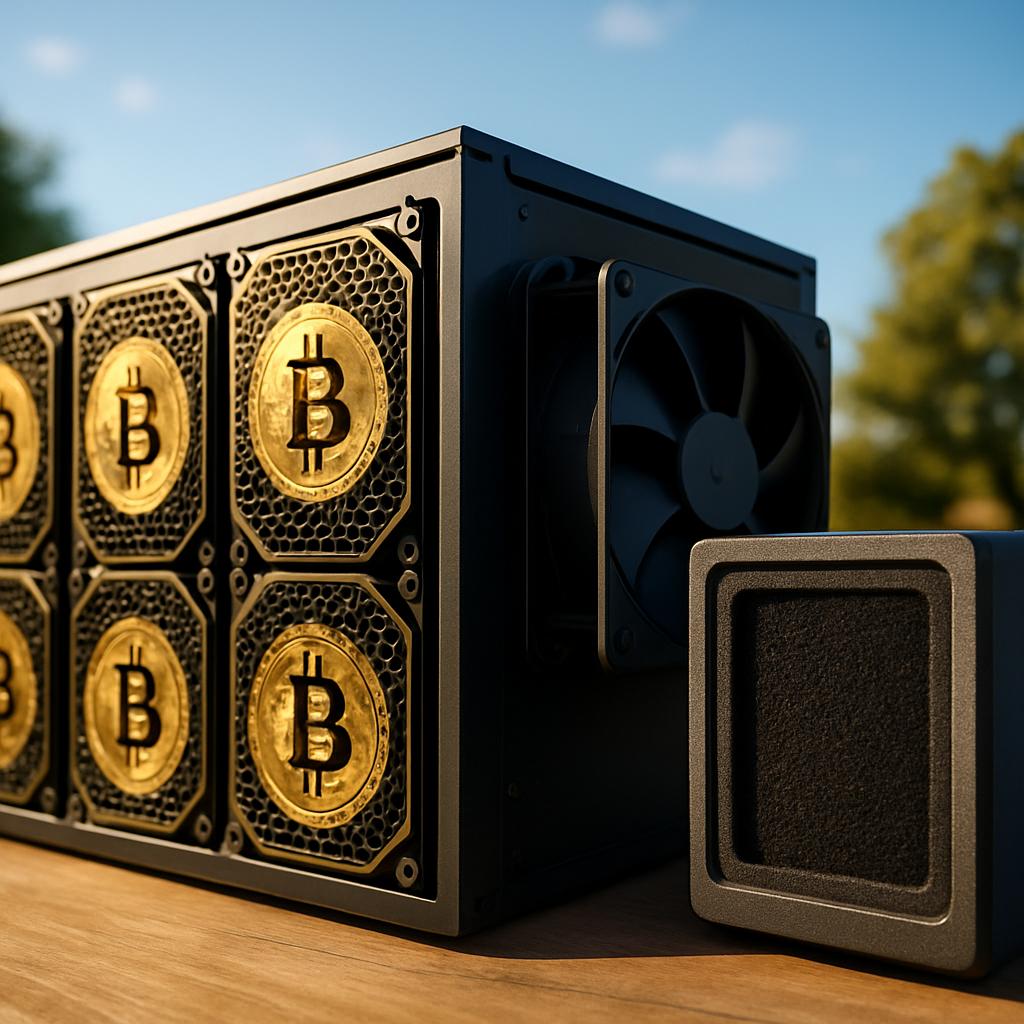
Bitcoin Mining Hardware Noise Reduction: Advanced Solutions
Table of contents
- What are the main sources of noise in Bitcoin mining hardware?
- How can advanced fan solutions reduce Bitcoin mining hardware noise?
- What role do soundproofing enclosures play in Bitcoin mining noise reduction?
- Are liquid cooling systems effective for Bitcoin mining hardware noise control?
- What vibration damping techniques help minimize noise from Bitcoin mining rigs?
- How can software-based fan control improve noise levels in Bitcoin mining?
- Frequently Asked Questions
Bitcoin mining hardware is known for its intense computational power and equally intense noise output. As miners push for higher efficiency and greater hash rates, the noise generated by mining rigs can become a significant disturbance, especially for home-based or small-scale operations. Reducing the noise from Bitcoin mining hardware not only creates a more comfortable environment but also helps in maintaining operational focus and community relations. Exploring advanced noise reduction solutions can provide miners with practical ways to manage and minimize sound without compromising performance.
What are the main sources of noise in Bitcoin mining hardware?
Bitcoin mining rigs typically consist of high-powered GPUs or ASIC miners that require substantial cooling to operate efficiently. The primary sources of noise include:
- Cooling fans: High-speed fans generate constant, loud airflow sounds to dissipate heat.
- Power supplies: Electrical components and transformers can emit humming or buzzing noises.
- Vibrations: Hard drives, fans, and mounting hardware may cause vibrations that amplify sound levels.
Understanding these noise origins helps in selecting targeted reduction strategies that address specific components rather than general noise alone.
How can advanced fan solutions reduce Bitcoin mining hardware noise?
Fans are often the loudest element in mining devices, running at high RPMs to cool overheating components. Advanced fan solutions focus on balancing airflow efficiency with quieter operation:
- Variable speed fans: Fans that adjust speed dynamically based on temperature reduce noise during low load periods.
- Larger diameter fans: Bigger fans can move the same amount of air at lower speeds, decreasing noise output.
- High-quality bearings: Using fluid dynamic or magnetic bearings minimizes friction noise.
- Acoustic fan enclosures: Specially designed enclosures can contain and absorb fan noise.
Implementing these types of fans or retrofitting existing mining rigs with quieter models can significantly reduce overall hardware noise.
What role do soundproofing enclosures play in Bitcoin mining noise reduction?
Soundproofing enclosures are custom or commercial boxes designed to house mining rigs while blocking noise transmission. Key features include:
- Noise-absorbing materials: Foam, mass-loaded vinyl, or fiberglass liners dampen sound waves.
- Ventilation design: Acoustic vents allow airflow without letting noise escape.
- Vibration isolation mounts: Reducing vibration transfer to enclosure surfaces decreases sound amplification.
These enclosures can be built DIY or purchased, providing a controlled environment that reduces sound by up to 40-60 decibels depending on design quality.
Are liquid cooling systems effective for Bitcoin mining hardware noise control?
Liquid cooling is an alternative to traditional air cooling that involves circulating coolant through heat exchangers attached to mining components. Benefits for noise reduction include:
- Reduced fan reliance: Liquid cooling systems often require fewer or slower fans, lowering noise levels.
- Efficient heat transfer: Coolant absorbs heat more effectively, maintaining lower component temperatures quietly.
- Customizable setups: Closed-loop or custom water cooling loops can be tailored to specific mining hardware.
Although liquid cooling setups have higher upfront costs and maintenance needs, they provide a quieter mining environment that can extend hardware lifespan.
What vibration damping techniques help minimize noise from Bitcoin mining rigs?
Vibrations from mining hardware can cause rattling or buzzing that increases perceived noise. Vibration damping strategies focus on isolating components and absorbing mechanical energy:
- Rubber or silicone mounts: Placing fans and hard drives on soft mounts reduces vibration transmission.
- Anti-vibration pads: Adding pads under mining frames or racks cuts down on resonance with surfaces.
- Tightening loose hardware: Ensuring screws and bolts are secure prevents additional rattling.
- Balanced fan blades: Correcting imbalances in fan blades limits vibration generation.
These methods can be combined for effective noise control without major changes to mining hardware.
How can software-based fan control improve noise levels in Bitcoin mining?
Software solutions that monitor temperature sensors and adjust fan speeds intelligently contribute to noise reduction by avoiding excessive airflow when unnecessary. Features include:
- Temperature thresholds: Fans ramp up only when temperatures exceed specified limits.
- Profile customization: Users can create noise-priority profiles that favor quieter operation over maximum cooling.
- Remote monitoring and control: Mining operators can adjust fan curves remotely for optimal noise and performance balance.
Many modern mining control programs or motherboard utilities support these functions, allowing miners to fine-tune noise output through software.
Frequently Asked Questions
What is the average noise level of Bitcoin mining hardware?
Bitcoin mining rigs typically produce noise levels ranging from 60 to 100 decibels depending on fan speed, hardware type, and cooling solutions used.
Can soundproofing reduce mining noise without overheating the hardware?
Yes, soundproofing enclosures that incorporate proper ventilation and heat dissipation materials can reduce noise while maintaining safe operating temperatures.
Is liquid cooling worth the investment for noise reduction in mining?
Liquid cooling offers significant noise reduction benefits but involves higher costs and maintenance. It is often worth it for large-scale or noise-sensitive mining setups.
How can I reduce fan noise without replacing hardware?
Adjusting fan speeds through software control, cleaning dust buildup, balancing fan blades, and adding vibration dampers are effective ways to reduce fan noise without hardware replacement.