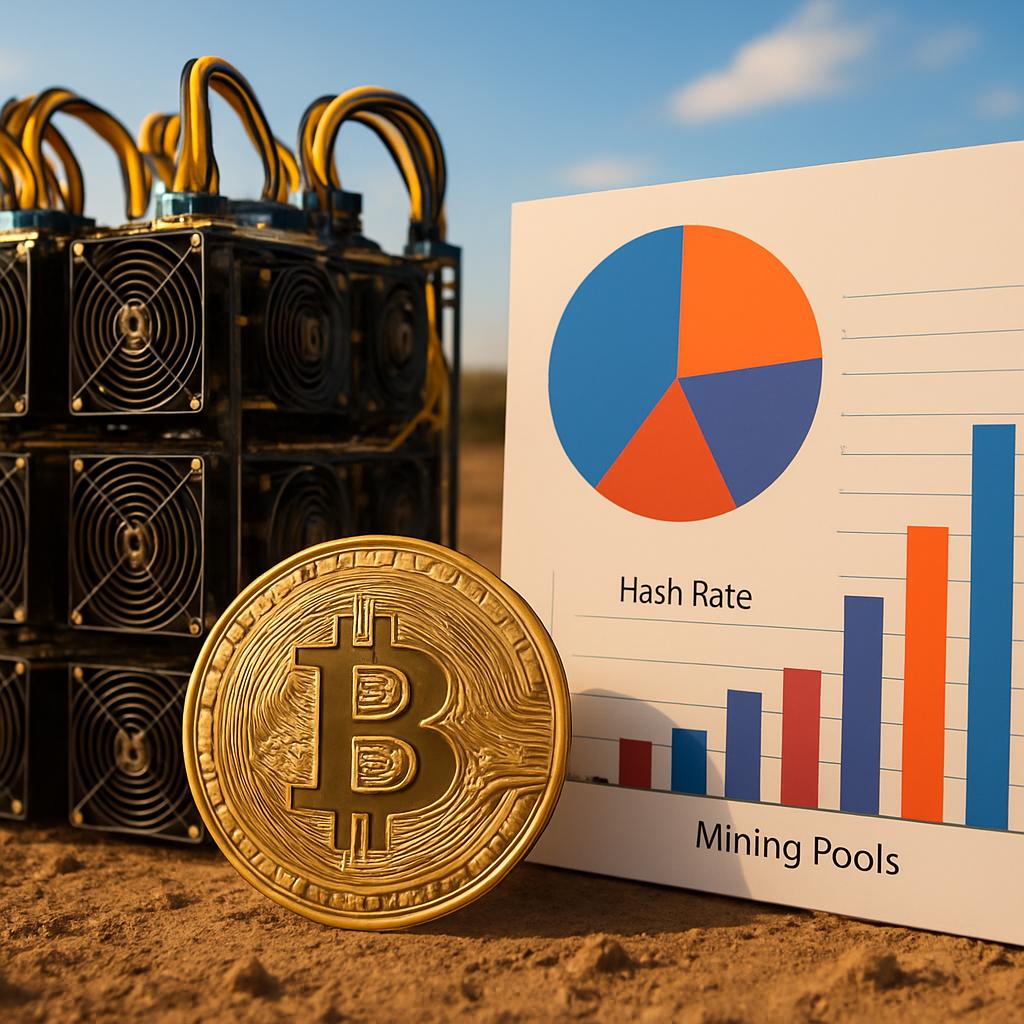
Bitcoin Mining Pool Hashrate Distribution: Centralization Analysis
Table of contents
- What is Bitcoin Mining Pool Hashrate Distribution?
- How Does Bitcoin Mining Pool Hashrate Affect Network Security?
- What Are the Current Trends in Bitcoin Mining Pool Hashrate Centralization?
- What Factors Influence Bitcoin Mining Pool Hashrate Distribution?
- How Can Bitcoin Mining Pool Hashrate Centralization Be Mitigated?
- Frequently Asked Questions
Bitcoin mining remains a cornerstone of the cryptocurrency ecosystem, securing the network and validating transactions. Yet, the distribution of mining power across different pools has sparked ongoing discussions about decentralization and the security risks linked to concentrated hashrate control. Understanding how mining pool hashrate is spread out offers valuable insight into the health and resilience of the Bitcoin network. This article explores Bitcoin mining pool hashrate distribution and presents an analysis of centralization trends shaping the industry.
What is Bitcoin Mining Pool Hashrate Distribution?
Bitcoin mining pool hashrate distribution refers to how the total computational power dedicated to mining Bitcoin is divided among different mining pools. Miners join pools to combine their processing power, increasing the chances of earning mining rewards in a more consistent manner.
The combined hashrate of all active miners determines how fast new blocks are validated and added to the blockchain. Pools with larger shares of the network’s total hashrate wield greater influence over block production and potentially network governance.
Key points about hashrate distribution include:
- It is measured in hashes per second (H/s), often represented in terahashes per second (TH/s) for Bitcoin.
- Distribution shifts over time as miners join or leave pools.
- A highly skewed distribution towards a few pools may raise concerns about centralization risks.
How Does Bitcoin Mining Pool Hashrate Affect Network Security?
The level of decentralization in hashrate distribution impacts Bitcoin’s security model. When mining power is widely distributed, no single entity or coalition can easily execute attacks such as double spending or censoring transactions.
Conversely, if a few mining pools control a majority of the hashrate, they could theoretically execute a 51% attack, rewriting transaction history or blocking certain transactions from being confirmed.
Security implications tied to hashrate concentration include:
- Risk of majority attacks if a single pool exceeds 50% of total hashrate.
- Potential collusion among large pools increases centralization threats.
- Reduced network robustness to censorship or manipulation.
Maintaining a balanced hashrate distribution is critical for preserving Bitcoin’s trustless and permissionless nature.
What Are the Current Trends in Bitcoin Mining Pool Hashrate Centralization?
Recent data reveals that Bitcoin mining pool hashrate is concentrated among a handful of dominant players, but the landscape is dynamic. Several large pools consistently control significant portions of the network, while smaller pools and solo miners hold smaller shares.
Observations on current trends:
- The top 5 to 7 mining pools often control around 70% to 80% of the network’s total hashrate.
- Regional factors, such as mining-friendly regulations and electricity costs, influence pool dominance.
- Some pools have voluntarily limited their share to avoid centralization concerns.
Examples of major mining pools frequently leading in hashrate share:
- Foundry USA
- F2Pool
- AntPool
- Binance Pool
- Poolin
Market fluctuations, hardware availability, and geopolitical events continue to reshape hashrate distribution patterns.
What Factors Influence Bitcoin Mining Pool Hashrate Distribution?
Multiple elements contribute to how mining power is distributed across pools. Understanding these helps explain why certain pools dominate and how the ecosystem evolves.
Important factors include:
- Mining hardware efficiency: Pools with access to the latest ASIC miners can offer more consistent rewards.
- Electricity costs: Low energy prices attract miners to certain pools or regions.
- Pool fees and reward mechanisms: Competitive fee structures and payout policies impact miner preferences.
- Geopolitical environment: Regulations, government policies, and internet infrastructure affect mining operations.
- Network upgrades or forks: Changes to Bitcoin protocol can shift miner incentives or hardware compatibility.
- Trust and reputation: Pools with transparent operations and reliable payments attract more miners.
The interplay of these factors shapes the distribution and competitiveness of mining pools globally.
How Can Bitcoin Mining Pool Hashrate Centralization Be Mitigated?
Reducing the risk of excessive centralization in mining pools strengthens Bitcoin’s decentralized ethos and security. Several approaches and innovations aim to diversify hashrate concentration.
Potential mitigation strategies include:
- Encouraging the use of smaller or newer mining pools.
- Developing decentralized mining pool protocols that reduce reliance on centralized operators.
- Promoting solo mining with improved solo mining tools and incentives.
- Implementing protocol-level changes that discourage mining power accumulation.
- Increasing transparency and governance participation within pools.
- Diversifying mining hardware and geographic locations.
These efforts contribute to a more distributed and resilient mining ecosystem.
Frequently Asked Questions
What is the ideal Bitcoin mining pool hashrate distribution for security?
An ideal distribution avoids any single pool exceeding 50% of total hashrate, with a broad spread among many pools to ensure no centralized control or attack risks.
Can a single mining pool launch a 51% attack on Bitcoin?
If a single pool controls over 50% of total hashrate, it could theoretically execute a 51% attack, but in practice, pools often self-regulate to avoid such scenarios due to reputational risks.
How often does Bitcoin mining pool hashrate distribution change?
Hashrate distribution changes frequently, influenced by miner migrations, market conditions, hardware availability, and external factors like energy prices or regulations.
Are smaller Bitcoin mining pools more decentralized?
Smaller pools contribute to decentralization, but they may offer less stable rewards. A mix of small and large pools tends to support network health by balancing distribution with reliability.