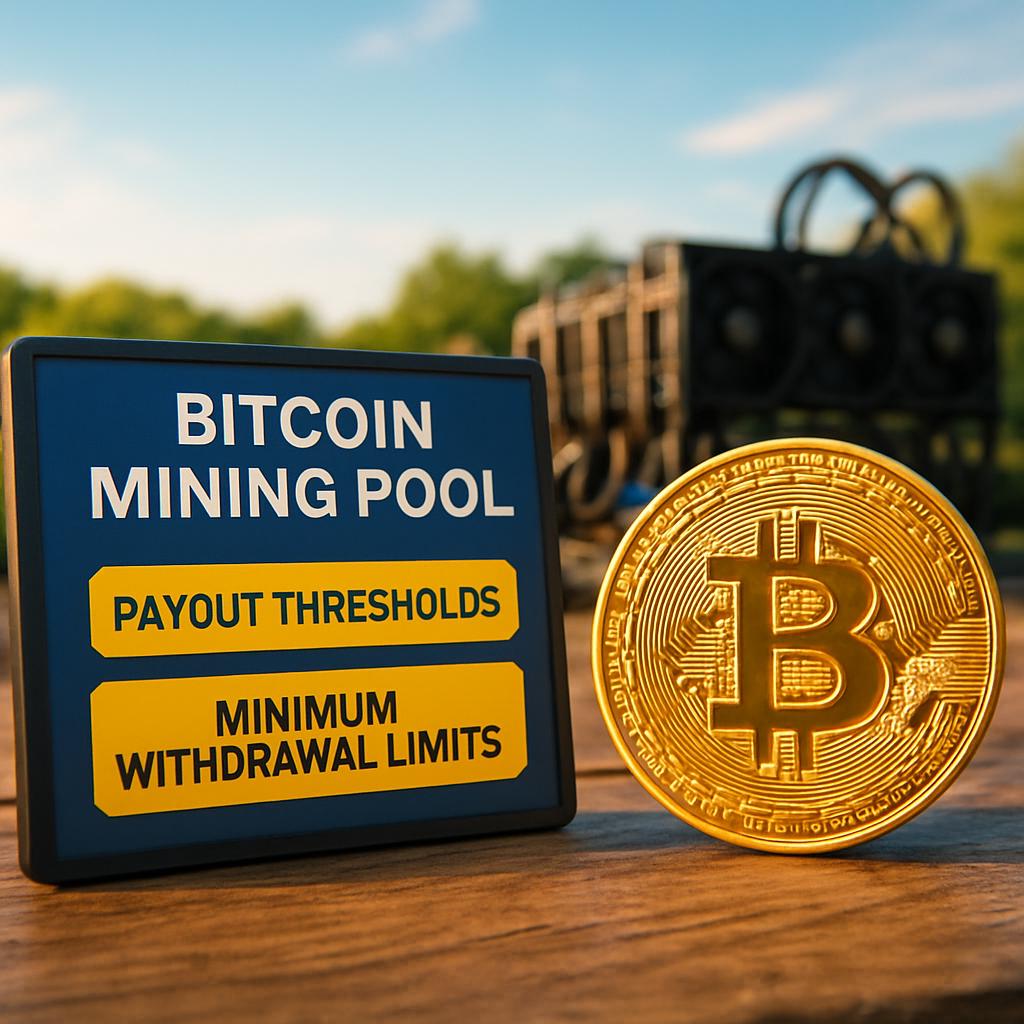
Bitcoin Mining Pool Payout Thresholds: Minimum Withdrawal Limits
Table of contents
- What is a Bitcoin Mining Pool Payout Threshold?
- How Do Minimum Withdrawal Limits Affect Bitcoin Miners?
- What Are Typical Payout Thresholds in Bitcoin Mining Pools?
- How to Choose the Best Bitcoin Mining Pool Based on Payout Thresholds?
- How Do Bitcoin Network Fees Influence Mining Pool Payout Thresholds?
- How Can Miners Manage Payout Thresholds to Maximize Earnings?
- Frequently Asked Questions
Bitcoin mining pools have become a cornerstone of the cryptocurrency ecosystem, allowing miners to combine their computational power and share rewards more consistently. One critical aspect that often puzzles miners, especially newcomers, is the concept of payout thresholds or minimum withdrawal limits. These thresholds determine when a miner can withdraw their earned Bitcoin from the pool. Understanding how payout thresholds work can help miners optimize their earnings and manage their funds effectively.
What is a Bitcoin Mining Pool Payout Threshold?
A Bitcoin mining pool payout threshold is the minimum amount of Bitcoin a miner must accumulate in their pool account before they can request a withdrawal. Mining pools don’t typically allow instant withdrawals for every tiny reward because handling numerous small transactions could be inefficient and costly due to Bitcoin network fees.
Pools set these minimum limits to:
- Reduce transaction fees by batching payments
- Manage payment processing workload
- Maintain network efficiency
Each mining pool has its own payout threshold, which can range from a fraction of a Bitcoin to much smaller amounts expressed in satoshis (the smallest unit of Bitcoin). Miners need to reach this threshold before triggering a payout.
How Do Minimum Withdrawal Limits Affect Bitcoin Miners?
Minimum withdrawal limits influence how often miners receive their payouts and how much they accumulate before withdrawing. These limits can impact miners in several ways:
- Cash flow frequency: Higher thresholds mean fewer, larger payouts; lower thresholds enable more frequent payouts.
- Transaction fees: Pools with higher thresholds often save on fees by making fewer transactions.
- Wallet management: Frequent small payouts may clutter wallet histories and increase transaction costs when moving funds further.
- Mining strategy: Small-scale miners might struggle to meet high thresholds quickly, leading to longer waiting times for rewards.
Understanding these effects helps miners choose the right pool and withdrawal strategy based on their mining scale and cash flow needs.
What Are Typical Payout Thresholds in Bitcoin Mining Pools?
Bitcoin mining pools vary widely in their payout thresholds. Common examples of minimum withdrawal limits include:
- Standard thresholds: 0.001 BTC to 0.01 BTC — typical for many popular pools.
- Low thresholds: Pools targeting small-scale miners may allow withdrawals as low as 0.0001 BTC or even less.
- Customizable thresholds: Some pools provide miners with options to set their own payout limits within a range.
Here are a few examples from well-known mining pools:
| Mining Pool | Minimum Payout Threshold |
|---|---|
| Slush Pool | 0.001 BTC |
| F2Pool | 0.001 BTC |
| Antpool | 0.01 BTC |
| BTC.com | 0.001 BTC |
| ViaBTC | 0.0001 BTC |
Miners should check each pool’s policies to find the best fit for their mining scale and payout preferences.
How to Choose the Best Bitcoin Mining Pool Based on Payout Thresholds?
Selecting a mining pool involves balancing payout thresholds against other factors like fees, reliability, and payout methods. Here are key points to consider when evaluating pools for payout limits:
- Mining scale: Larger miners can afford higher thresholds for less frequent but larger payouts; smaller miners benefit from low thresholds.
- Fee structure: Assess if the pool deducts fees on payouts and how that interacts with minimum withdrawal amounts.
- Payout frequency: Some pools have scheduled payout intervals (daily, weekly), which can influence how soon miners receive funds.
- Payment methods: Pools may pay directly to Bitcoin wallets, or use other methods like PPLNS or PPS, impacting payout timing and amounts.
- Pool reputation: Reliable payout history and transparency are important even if thresholds are attractive.
Miners should prioritize pools that align with their operational scale and cash flow preferences to maximize mining profitability.
How Do Bitcoin Network Fees Influence Mining Pool Payout Thresholds?
Bitcoin’s transaction fees fluctuate based on network congestion and transaction size, directly affecting mining pool payout strategies. Pools set payout thresholds partly to optimize for these fees:
- Higher fees: When network fees spike, pools may increase payout thresholds to batch payments and reduce costs.
- Lower fees: During low congestion, pools might lower thresholds to offer more frequent payouts.
- Fee sharing: Some pools absorb fees as part of their service, while others pass fees onto miners, influencing the effective payout amount.
Miners should keep an eye on fee trends and pool announcements to avoid unexpected costs and delays in receiving rewards.
How Can Miners Manage Payout Thresholds to Maximize Earnings?
Miners have several tactics to effectively manage payout thresholds and maximize their returns:
- Select pools with flexible thresholds: Choosing pools that allow setting custom withdrawal limits can optimize payout timing.
- Monitor network fees: Timing withdrawals during low fee periods can reduce costs.
- Combine payouts: Some miners use merge mining or multiple pools to increase earnings and reach thresholds faster.
- Regular wallet maintenance: Consolidate small payouts when possible to avoid excessive on-chain transaction fees later.
- Use Lightning Network or second-layer solutions: Emerging technologies can facilitate faster, cheaper withdrawals outside the main Bitcoin chain.
Adopting these strategies can help miners keep more of their earnings and maintain liquidity.
Frequently Asked Questions
What is the minimum payout limit for Bitcoin mining pools?
Minimum payout limits vary by pool but typically range from 0.0001 BTC to 0.01 BTC. The exact threshold depends on the pool’s fee policy and payment system.
Why do mining pools set minimum withdrawal thresholds?
Pools set minimum withdrawal limits to reduce the cost and complexity of processing many small transactions, helping manage network fees and operational overhead.
Can I change the payout threshold in a Bitcoin mining pool?
Some mining pools allow miners to customize their payout thresholds within certain limits, while others have fixed minimum withdrawal amounts.
How do Bitcoin transaction fees affect mining pool payouts?
Higher Bitcoin network fees lead pools to increase payout thresholds to batch payments and reduce costs, which may delay miners’ ability to withdraw rewards.