Bitcoin Mining Pool Selection Criteria: What to Look For
Table of contents
- What Are the Important Bitcoin Mining Pool Selection Criteria?
- How Do Pool Fees Affect Bitcoin Mining Profitability?
- What Are the Different Bitcoin Mining Pool Payout Structures?
- Why Does Pool Size and Hash Rate Matter When Choosing a Bitcoin Mining Pool?
- How Do Server Locations and Latency Impact Bitcoin Mining Pool Performance?
- What Security Features Should You Look For in Bitcoin Mining Pools?
- How Important Is Pool Reputation and User Support?
- Frequently Asked Questions
Mining Bitcoin independently can be a challenging and resource-intensive task. Joining a Bitcoin mining pool offers a more steady and predictable way to earn rewards by combining the hashing power of multiple miners. But with numerous pools available, how do you decide which one to join? Selecting the right Bitcoin mining pool can significantly impact your earnings, fees, and overall mining experience. This guide will walk you through the key criteria to consider when choosing a Bitcoin mining pool.
What Are the Important Bitcoin Mining Pool Selection Criteria?
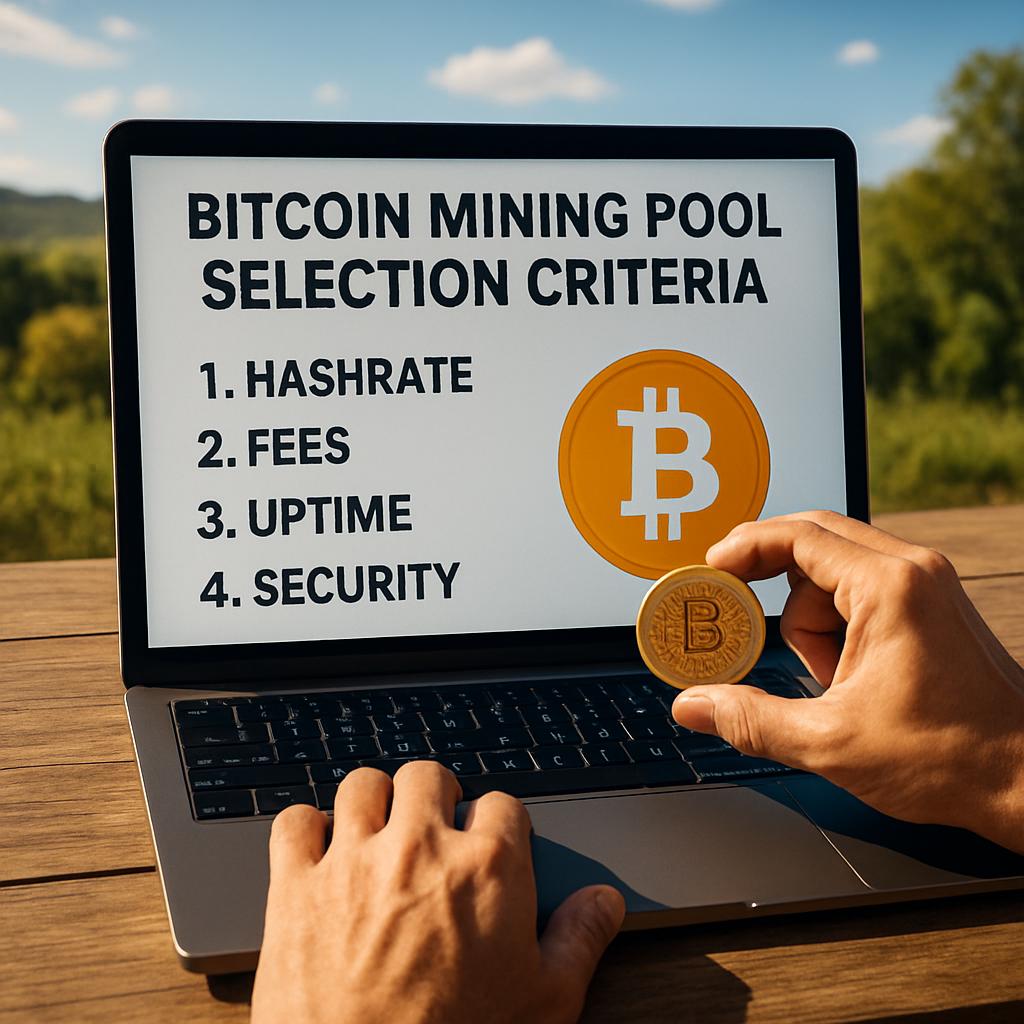
Choosing a mining pool involves evaluating several factors that affect profitability, reliability, and user experience. The main criteria include:
- Pool fees: Most pools charge a percentage fee on your mining rewards.
- Payout structure: The method pools use to distribute rewards can vary.
- Pool size and hash rate: Larger pools usually find blocks more consistently.
- Server locations and latency: Proximity to pool servers can reduce stale shares.
- Reputation and transparency: Pools with a solid track record build trust.
- Payment frequency: How often you receive payouts matters for cash flow.
- Security measures: Protection against attacks and fraud is critical.
- User interface and support: Ease of use and responsive support improve your experience.
Each of these factors plays a role in maximizing your Bitcoin mining returns and minimizing potential risks.
How Do Pool Fees Affect Bitcoin Mining Profitability?
Mining pools typically charge fees ranging from 0% to 3% of your mining rewards. These fees cover operational costs and maintenance. Lower fees increase your share of the rewards but might come with less reliable service or fewer features.
Common fee models include:
- Fixed fees: A set percentage charged on all rewards.
- Variable fees: Fees may change based on pool performance or features.
- No-fee pools: Some pools operate without fees, earning revenue from donations or other means.
While low fees are attractive, consider the trade-offs with performance and reliability. Sometimes paying a small fee ensures better uptime and faster payouts, which can improve your effective earnings.
What Are the Different Bitcoin Mining Pool Payout Structures?
Mining pools use various payout methods to distribute earnings among participants. Understanding these helps you choose a pool that aligns with your preferences and risk tolerance.
Popular payout structures include:
- Pay-Per-Share (PPS): You receive a fixed reward for each share submitted, providing predictable payouts but typically higher fees.
- Proportional: Rewards are distributed based on the number of shares you contributed during a round; payouts vary with luck.
- Pay-Per-Last-N-Shares (PPLNS): Rewards depend on shares in the last N shares, rewarding consistent miners.
- Score-based: Shares submitted earlier in a round have more weight, reducing pool hopping.
- Solo mining pools: You receive the full block reward but with much less frequent payouts.
Your choice depends on whether you prefer steady income or potentially higher, though less frequent, payouts.
Why Does Pool Size and Hash Rate Matter When Choosing a Bitcoin Mining Pool?
The size and total hash rate of a mining pool influence how often the pool finds blocks and distributes rewards. Larger pools with higher hash rates tend to find blocks more regularly, providing consistent payouts but smaller individual rewards per block.
Small pools find blocks less frequently, which means payouts are larger when a block is found but less predictable. Some miners prefer smaller pools for the chance at bigger rewards and supporting decentralization.
Consider the following:
- Large pools (over 10% of network hash rate) offer steady income but may contribute to centralization risks.
- Medium-sized pools balance consistency and decentralization.
- Small pools offer potential for higher rewards but increased variance.
How Do Server Locations and Latency Impact Bitcoin Mining Pool Performance?
Mining pools operate servers worldwide to handle miners’ share submissions. Your connection to these servers affects how quickly your shares are accepted and reduces stale shares.
Stale shares occur when your submitted work is no longer valid because another block has already been found. High latency increases the chance of stale shares, lowering your effective mining rewards.
Look for pools with:
- Servers geographically close to your mining setup.
- Multiple server locations with failover options.
- Low latency and stable connections.
Reducing latency optimizes your mining efficiency and maximizes rewards.
What Security Features Should You Look For in Bitcoin Mining Pools?
Security is vital when joining a mining pool because you entrust the pool with your mining power and earnings. Pools with weak security can be targets for attacks or fraud.
Key security features to check include:
- Two-factor authentication (2FA) for account access.
- Secure SSL encryption for data transmission.
- Regular security audits and transparency reports.
- Protection mechanisms against Distributed Denial of Service (DDoS) attacks.
- Transparent payout policies to prevent reward manipulation.
Choosing a secure pool helps protect your mining returns and personal information.
How Important Is Pool Reputation and User Support?
A mining pool’s reputation provides insight into its reliability and trustworthiness. Reading reviews and community feedback can reveal issues like frequent downtimes, payment delays, or unfair practices.
Good customer support ensures you get timely help with technical problems or payout issues. Pools offering:
- Active community forums.
- Responsive support teams.
- Detailed guides and FAQs.
can improve your overall mining experience.
Frequently Asked Questions
What is the best Bitcoin mining pool for beginners?
Pools with a user-friendly interface, low fees, and reliable payouts like Slush Pool or F2Pool are good for beginners. They offer extensive documentation and support to help new miners get started.
How do mining pool fees affect my earnings?
Mining pool fees reduce your total mining rewards by a percentage. Lower fees mean higher take-home pay, but pools charging fees often provide better services and more consistent payouts.
Can I switch Bitcoin mining pools anytime?
Yes, you can switch pools whenever you want. Most miners switch pools in response to fees, payouts, or reliability. Switching pools is usually straightforward but may require some configuration changes.
What payout method yields the highest profits?
No single payout method guarantees the highest profits. Pay-Per-Share (PPS) offers steady income but slightly lower overall returns due to fees. Proportional or PPLNS methods may provide higher payouts over time but with more variance.
Selecting a Bitcoin mining pool involves balancing factors like fees, payout methods, pool size, latency, security, and reputation. By carefully evaluating these criteria, you can find a pool that fits your mining goals and maximizes your Bitcoin earnings.