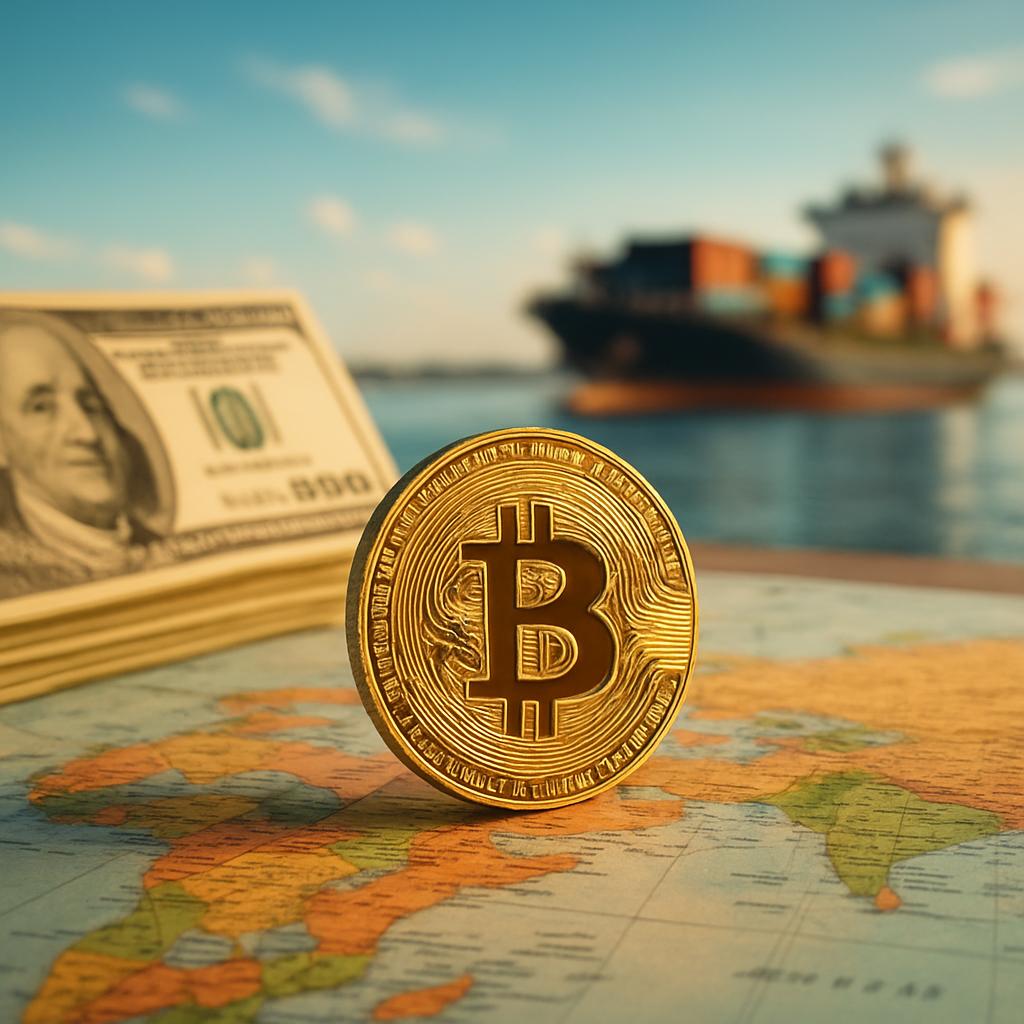
How Bitcoin is Reshaping International Trade and Monetary Policy
Table of contents
- How is Bitcoin influencing international trade?
- What role does Bitcoin play in reshaping monetary policy?
- How does Bitcoin enhance cross-border payments compared to traditional systems?
- What challenges does Bitcoin face in transforming global trade and monetary systems?
- What future trends can we expect for Bitcoin’s impact on international trade and monetary policy?
- Frequently Asked Questions
Bitcoin has steadily moved beyond its initial role as a digital currency for individual transactions. Its influence now extends into international trade and monetary policy, challenging traditional systems and offering new possibilities for global finance. By facilitating borderless transactions and introducing decentralized monetary principles, Bitcoin is reshaping how countries and businesses engage across borders. Understanding this transformation reveals key insights into the future of global commerce and economic governance.
How is Bitcoin influencing international trade?
Bitcoin offers a decentralized payment system not bound by traditional banking infrastructure or national borders. This allows businesses and individuals to transact directly with one another, reducing reliance on intermediaries such as banks and payment processors.
Key ways Bitcoin impacts international trade include:
- Lower Transaction Costs: Bitcoin transactions can bypass fees associated with currency conversions and international wire transfers.
- Faster Settlements: Cross-border payments using Bitcoin often settle in minutes instead of days.
- Increased Transparency: The public blockchain ledger provides an immutable record of transactions, improving traceability.
- Improved Access: Businesses in countries with limited banking services can participate in global trade using Bitcoin.
- Currency Stability for Some: In countries facing hyperinflation or currency controls, Bitcoin offers an alternative store of value and medium of exchange.
Companies engaged in import-export activities are exploring Bitcoin for payments, leveraging its borderless nature to streamline operations and reduce exposure to exchange rate fluctuations.
What role does Bitcoin play in reshaping monetary policy?
Bitcoin operates on a decentralized network without central bank control, which contrasts sharply with traditional fiat currencies managed through monetary policy tools like interest rates and money supply adjustments.
Bitcoin’s fixed supply cap of 21 million coins introduces a deflationary element that challenges the inflationary tendencies of fiat currencies. This has sparked discussions about:
- Monetary Sovereignty: Countries may face new challenges in controlling their money supply as Bitcoin adoption grows.
- Alternative Reserves: Some governments and institutions consider Bitcoin as a reserve asset alongside gold and foreign currency.
- Inflation Hedge: Bitcoin is viewed by some as a hedge against inflation, pressuring central banks to reconsider policies.
- Reduced Dependency: Bitcoin can reduce dependency on dominant reserve currencies like the US dollar in international trade.
Central banks and policymakers are monitoring Bitcoin closely, assessing how its rise may compel adaptations in monetary frameworks and currency management strategies.
How does Bitcoin enhance cross-border payments compared to traditional systems?
Traditional cross-border payments often involve multiple intermediaries, lengthy processing times, and high fees. Bitcoin’s blockchain technology enables direct peer-to-peer transfers that address many of these inefficiencies.
Benefits of Bitcoin for cross-border payments include:
- Speed: Transactions typically settle within 10-60 minutes, whereas bank transfers can take several business days.
- Cost Efficiency: Lower fees by cutting out correspondent banks and currency exchange costs.
- Accessibility: Users can send and receive Bitcoin anywhere with an internet connection, without requiring bank accounts.
- Security: Cryptographic verification reduces fraud risks and chargebacks.
- Programmability: Smart contracts can automate payment releases based on predefined conditions, useful for trade finance.
Businesses dealing with international suppliers and customers can leverage Bitcoin to improve cash flow and reduce operational friction.
What challenges does Bitcoin face in transforming global trade and monetary systems?
While Bitcoin offers numerous advantages, several hurdles limit its widespread adoption in international trade and monetary policy.
Some of the main challenges include:
- Regulatory Uncertainty: Varying global regulations create compliance complexities for businesses.
- Volatility: Bitcoin’s price fluctuations introduce risks in contract pricing and accounting.
- Scalability: Network congestion can slow transactions and increase fees during peak times.
- Acceptance: Many merchants and financial institutions have yet to adopt Bitcoin for payments.
- Legal and Tax Issues: Differing legal treatment of Bitcoin complicates cross-border transactions and reporting.
Addressing these challenges requires collaborative efforts among regulators, industry stakeholders, and technology developers.
What future trends can we expect for Bitcoin’s impact on international trade and monetary policy?
The relationship between Bitcoin, global trade, and monetary systems is evolving rapidly. Several trends are likely to shape this dynamic:
- Central Bank Digital Currencies (CBDCs): Governments exploring digital currencies may integrate features inspired by Bitcoin’s blockchain.
- Increased Institutional Adoption: More corporations and financial institutions are incorporating Bitcoin into treasury management and trade finance.
- Layer 2 Solutions: Technologies like the Lightning Network will improve Bitcoin’s scalability and micropayment capabilities.
- Cross-Border Trade Networks: Bitcoin-based payment networks may emerge to facilitate trade between specific regions or industries.
- Regulatory Clarity: Clearer policies can foster innovation and wider Bitcoin use in international commerce.
Monitoring these developments will provide insight into how Bitcoin continues to influence global economic structures.
Frequently Asked Questions
How does Bitcoin reduce costs in international trade?
Bitcoin eliminates intermediaries such as correspondent banks and reduces currency conversion fees, allowing faster and cheaper cross-border payments.
Can Bitcoin replace traditional currencies in global trade?
Bitcoin is unlikely to fully replace fiat currencies soon but serves as a complementary payment method and store of value in international transactions.
What impact does Bitcoin have on monetary policy control?
Bitcoin’s decentralized nature limits central banks’ ability to control money supply and inflation, prompting reconsideration of monetary policy tools.
Is Bitcoin widely accepted for international trade payments?
Adoption is growing but remains limited; regulatory hurdles and volatility continue to affect widespread acceptance among businesses and governments.