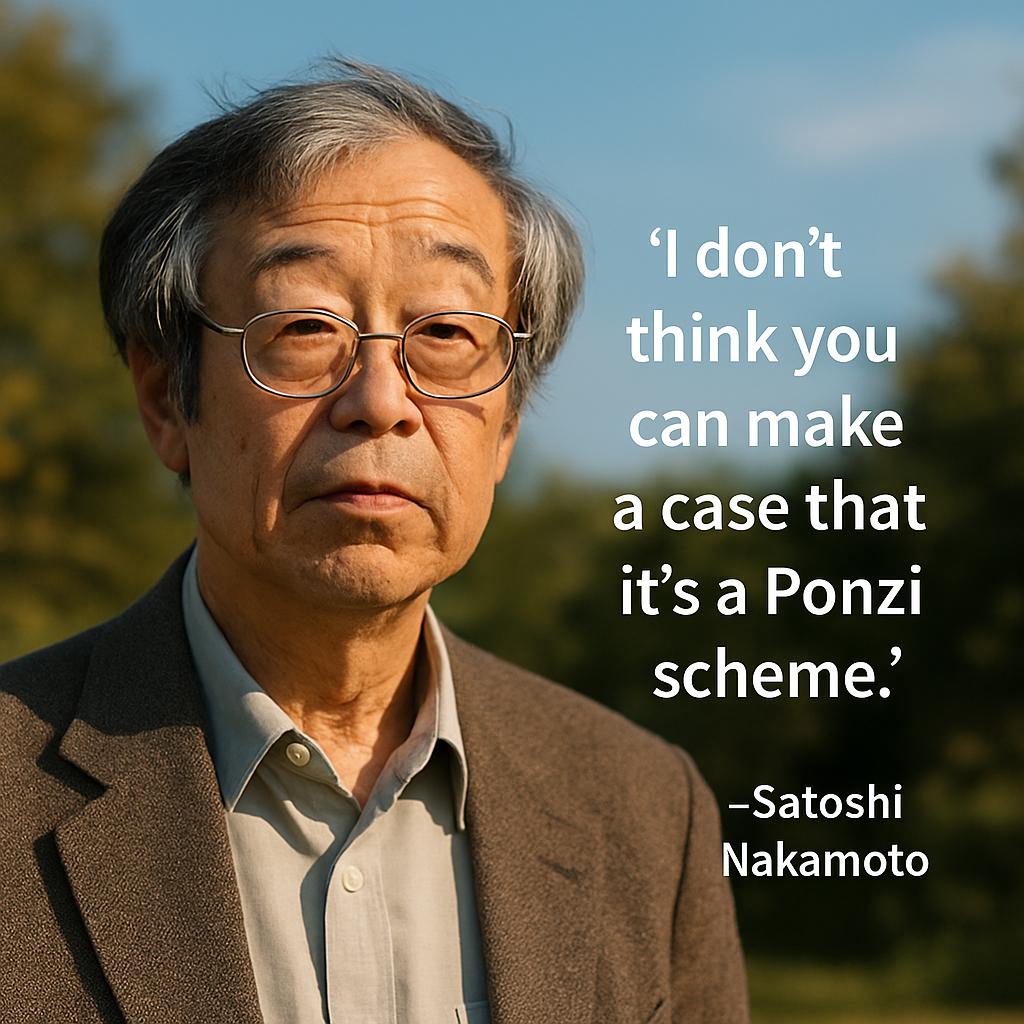
Satoshi’s Quote: I don’t think you can make a case that it’s a Ponzi scheme
Table of contents
- What did Satoshi mean by saying Bitcoin is not a Ponzi scheme?
- Why do some people still call Bitcoin a Ponzi scheme?
- How does Bitcoin’s design prevent it from being a Ponzi scheme?
- What lessons can investors learn from Satoshi’s quote about Bitcoin?
- How can understanding Satoshi’s quote improve crypto education?
- Frequently Asked Questions
Satoshi Nakamoto’s words have shaped the foundation of Bitcoin and how the world perceives decentralized digital currencies. One striking quote often referenced in crypto discussions is, “I don’t think you can make a case that it’s a Ponzi scheme.” This statement speaks volumes about Bitcoin’s design, intent, and how it differs from fraudulent financial models. Understanding the context and implications of this quote helps clarify Bitcoin’s legitimacy and the broader cryptocurrency ecosystem.
What did Satoshi mean by saying Bitcoin is not a Ponzi scheme?
Satoshi Nakamoto’s quote directly addresses a common criticism leveled at Bitcoin—that it’s a Ponzi scheme designed to defraud investors. A Ponzi scheme generates returns for earlier investors using the capital from new investors, collapsing when new investments dry up. Bitcoin, by contrast, operates on a decentralized blockchain with transparent rules and no central party promising guaranteed returns.
Key points about Bitcoin’s distinction from Ponzi schemes include:
- Bitcoin has no central operator or entity controlling the funds.
- Returns depend entirely on market demand and supply, not on funds from new participants.
- Users retain control of their assets through private keys.
- Bitcoin’s code and transaction history are publicly verifiable on the blockchain.
Satoshi’s quote highlights that Bitcoin’s economic model and technological framework don’t fit the criteria of a Ponzi scheme.
Why do some people still call Bitcoin a Ponzi scheme?
Despite Satoshi’s clarification, some skeptics label Bitcoin as a Ponzi scheme due to misunderstanding or misinformation. Common reasons include:
- The rising price of Bitcoin attracts speculative investors hoping for quick profits.
- Lack of intrinsic value compared to traditional assets like stocks or bonds.
- Comparisons to early adopters benefiting disproportionately.
- Confusion between pyramid schemes and decentralized cryptocurrencies.
These criticisms often overlook the fact that Bitcoin’s value is driven by network effects, scarcity (capped supply of 21 million coins), and increasing adoption rather than promises of fixed returns.
How does Bitcoin’s design prevent it from being a Ponzi scheme?
Bitcoin’s architecture incorporates mechanisms that prevent it from functioning like a Ponzi scheme:
- Decentralization: No single entity controls the network, reducing risks of fraud or manipulation.
- Open-source code: Anyone can review and audit the Bitcoin protocol.
- Fixed supply: Only 21 million bitcoins will ever exist, eliminating inflationary pressure.
- Mining and consensus: Bitcoin’s proof-of-work system rewards miners for securing the network, not for recruiting new participants.
- Transparency: All transactions are publicly accessible on the blockchain, ensuring accountability.
These features collectively foster trust and resilience, distancing Bitcoin from fraudulent financial constructs.
What lessons can investors learn from Satoshi’s quote about Bitcoin?
Satoshi’s assertion reminds investors to critically assess Bitcoin’s structure and risks rather than judge it based on misconceptions. Takeaways from this perspective include:
- Avoid equating Bitcoin’s price volatility with fraud.
- Recognize the importance of network security and decentralized consensus.
- Understand that Bitcoin’s value is speculative but anchored by fundamental technology.
- Research and verify information from credible sources before investing.
- Stay cautious about schemes promising guaranteed returns in the crypto space.
Approaching Bitcoin with informed skepticism helps individuals navigate the market more confidently.
How can understanding Satoshi’s quote improve crypto education?
Satoshi’s statement offers a valuable teaching moment for the crypto community and newcomers alike. Incorporating this quote in education efforts can:
- Clarify common myths about Bitcoin and Ponzi schemes.
- Promote awareness of blockchain technology’s transparency and security.
- Encourage critical thinking about investment opportunities versus scams.
- Highlight the difference between decentralized cryptocurrencies and centralized fraudulent schemes.
- Foster more responsible media reporting and public discourse on cryptocurrencies.
Educators and influencers can use this quote to build trust and dispel unfounded fears around Bitcoin.
Frequently Asked Questions
What is a Ponzi scheme and why is Bitcoin not one?
A Ponzi scheme is a fraudulent investment operation where returns are paid using new investors’ funds, collapsing when new money runs out. Bitcoin is not a Ponzi scheme because it has no central operator, operates transparently on a decentralized blockchain, and does not promise guaranteed returns.
Why do some people mistakenly call Bitcoin a Ponzi scheme?
Many confuse Bitcoin’s price speculation and early adopter gains with Ponzi schemes. Misunderstandings about its decentralized nature and lack of intrinsic value contribute to this misconception.
How does Bitcoin’s fixed supply affect its legitimacy?
Bitcoin’s capped supply of 21 million coins creates scarcity, which supports its value proposition. This contrasts with Ponzi schemes that rely on continual inflows of money, reinforcing Bitcoin’s legitimacy as a digital asset.
Can Bitcoin’s price volatility be mistaken for a Ponzi scheme?
Price volatility is common in emerging markets and speculative assets. It does not indicate a Ponzi scheme, which relies on fraudulent promises. Bitcoin’s volatility reflects market dynamics, adoption trends, and investor sentiment.