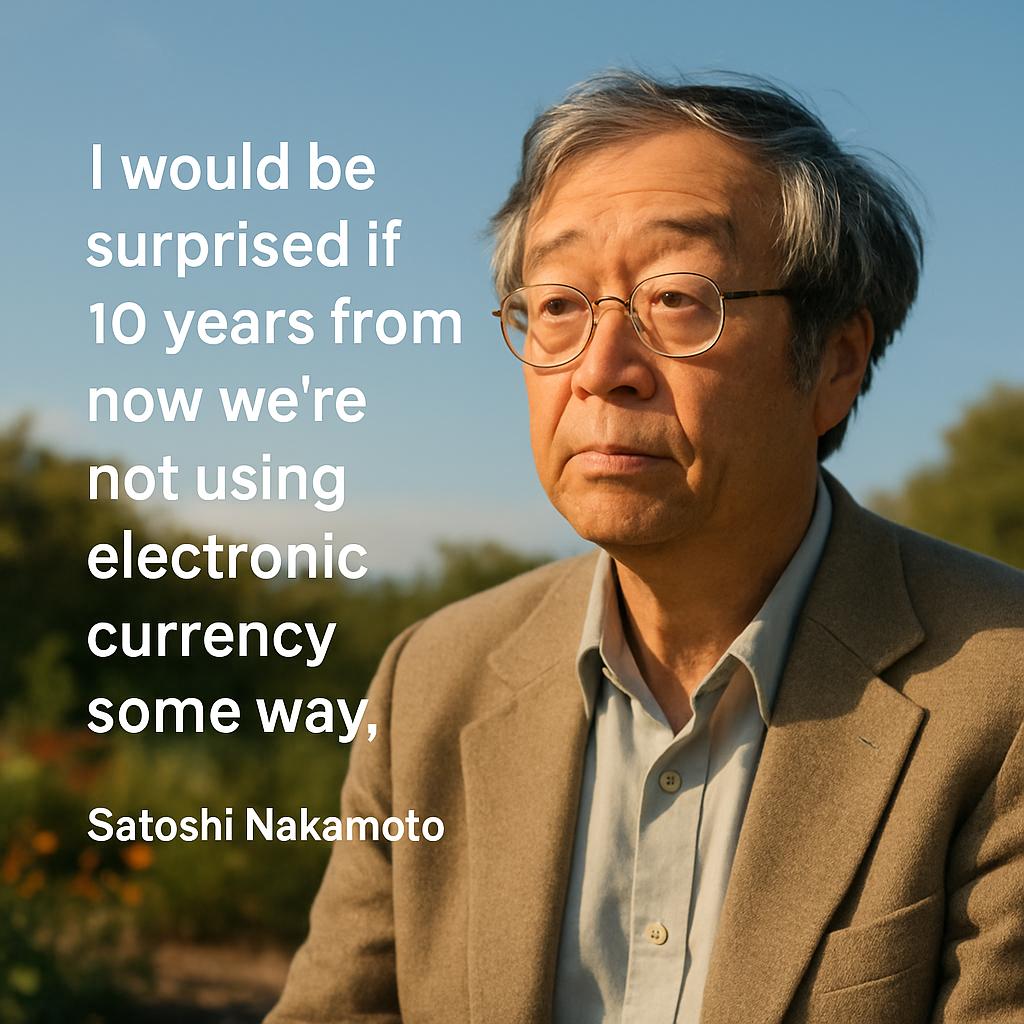
Satoshi’s Quote: I would be surprised if 10 years from now we’re not using electronic currency in some way
Table of contents
- What did Satoshi mean by electronic currency in 10 years?
- How has Bitcoin fulfilled Satoshi’s vision of electronic currency?
- What role do Bitcoin Layer 2 solutions play in advancing electronic currency?
- How is DeFi expanding the use cases of electronic currency?
- What challenges remain for widespread electronic currency adoption?
- Frequently Asked Questions
The concept of electronic currency has transformed significantly since the inception of Bitcoin in 2009. Satoshi Nakamoto, the enigmatic creator of Bitcoin, once expressed a vision about the future of money that resonates deeply today: “I would be surprised if 10 years from now we’re not using electronic currency in some way.” His foresight hinted at a fundamental shift in how people value and transfer wealth. This blog explores the evolution of electronic currency since Satoshi’s quote, the rise of Bitcoin as a pioneer, the role of Bitcoin Layer 2 solutions, and how decentralized finance (DeFi) is shaping the future of money.
What did Satoshi mean by electronic currency in 10 years?
Satoshi Nakamoto’s prediction about electronic currency was rooted in the limitations of traditional financial systems and the potential for digital innovation. By electronic currency, he referred to money that exists primarily in digital form and can be transferred electronically without intermediaries like banks.
- Digital currency enables near-instantaneous global transactions.
- It reduces the reliance on physical cash and legacy banking infrastructure.
- It incorporates cryptographic security to prevent fraud and double spending.
- Blockchain technology underpins trust and transparency without central authorities.
Satoshi envisioned a shift from fiat currency towards digital money systems that allow peer-to-peer value exchange, unbound by borders or third parties. Bitcoin was the first practical realization of this vision, introducing a decentralized, censorship-resistant monetary system.
How has Bitcoin fulfilled Satoshi’s vision of electronic currency?
Bitcoin’s creation marked a milestone for electronic currency, offering a new form of money that operates on a decentralized network. It addresses many problems inherent to traditional money systems:
- No central control by governments or banks.
- Transparent ledger with public transaction records.
- Fixed supply capped at 21 million coins to prevent inflation.
- Secure cryptography preventing counterfeit.
Over the past decade, Bitcoin has gained widespread attention and adoption as a store of value, medium of exchange, and hedge against inflation. Its infrastructure has matured, with millions of users and thousands of businesses accepting Bitcoin payments globally.
Bitcoin also paved the way for other cryptocurrencies and digital assets, catalyzing a broader ecosystem of electronic currencies that extend beyond fiat-backed digital money.
What role do Bitcoin Layer 2 solutions play in advancing electronic currency?
Bitcoin’s Layer 2 solutions are designed to enhance the network’s scalability and usability as electronic currency. These second-layer protocols operate on top of the Bitcoin blockchain, enabling faster and cheaper transactions without compromising security.
Key Layer 2 benefits include:
- Instant payments with near-zero fees.
- Increased transaction throughput supporting everyday use.
- Off-chain payment channels reducing blockchain congestion.
- Enhanced privacy for users during transactions.
The Lightning Network stands out as the most prominent Bitcoin Layer 2 solution. It allows users to open payment channels for multiple transactions off-chain, settling the final balances on the main Bitcoin blockchain later. This innovation brings Bitcoin closer to the traditional payment systems’ convenience while maintaining decentralization.
How is DeFi expanding the use cases of electronic currency?
Decentralized Finance (DeFi) builds on the principles of electronic currency by offering financial services without intermediaries, using blockchain technology and smart contracts. While DeFi initially flourished on platforms like Ethereum, Bitcoin’s ecosystem is increasingly integrating DeFi protocols.
DeFi expands electronic currency capabilities by enabling:
- Lending and borrowing without banks.
- Decentralized exchanges for direct peer-to-peer trading.
- Yield farming and liquidity mining for earning passive income.
- Tokenization of assets for broader market participation.
These applications transform electronic currency from a simple medium of exchange into a versatile financial tool that anyone with internet access can use globally. DeFi leverages the security and transparency of blockchain, empowering users with control over their assets and financial decisions.
What challenges remain for widespread electronic currency adoption?
Despite the progress, several challenges affect the mainstream adoption of electronic currency as predicted by Satoshi:
- Regulatory uncertainty and legal frameworks vary by country.
- User experience improvements are needed for mass adoption.
- Network scalability and transaction speed must continue improving.
- Security concerns regarding custody and wallet management persist.
- Public awareness and trust in cryptocurrencies remain a work in progress.
Overcoming these hurdles will require collaboration between developers, regulators, businesses, and users. Advancements in technology like Layer 2, cross-chain interoperability, and user-friendly interfaces will play crucial roles in addressing these challenges.
Frequently Asked Questions
What did Satoshi Nakamoto mean by electronic currency?
Satoshi Nakamoto referred to electronic currency as money that exists digitally and is transferred electronically without relying on traditional banking institutions, enabled by technologies like blockchain to ensure security and trust.
Has Bitcoin become widely used as electronic currency?
Bitcoin has seen significant growth and adoption as an electronic currency, especially as a store of value and for cross-border payments, though it is still gaining traction as a mainstream medium of exchange.
What are Bitcoin Layer 2 solutions, and why do they matter?
Bitcoin Layer 2 solutions, such as the Lightning Network, operate on top of the Bitcoin blockchain to enable faster, cheaper, and scalable transactions, making Bitcoin more practical for everyday use.
How does DeFi relate to electronic currency?
DeFi uses blockchain-based electronic currency to provide decentralized financial services like lending, borrowing, and trading without intermediaries, enhancing the utility and accessibility of digital money.