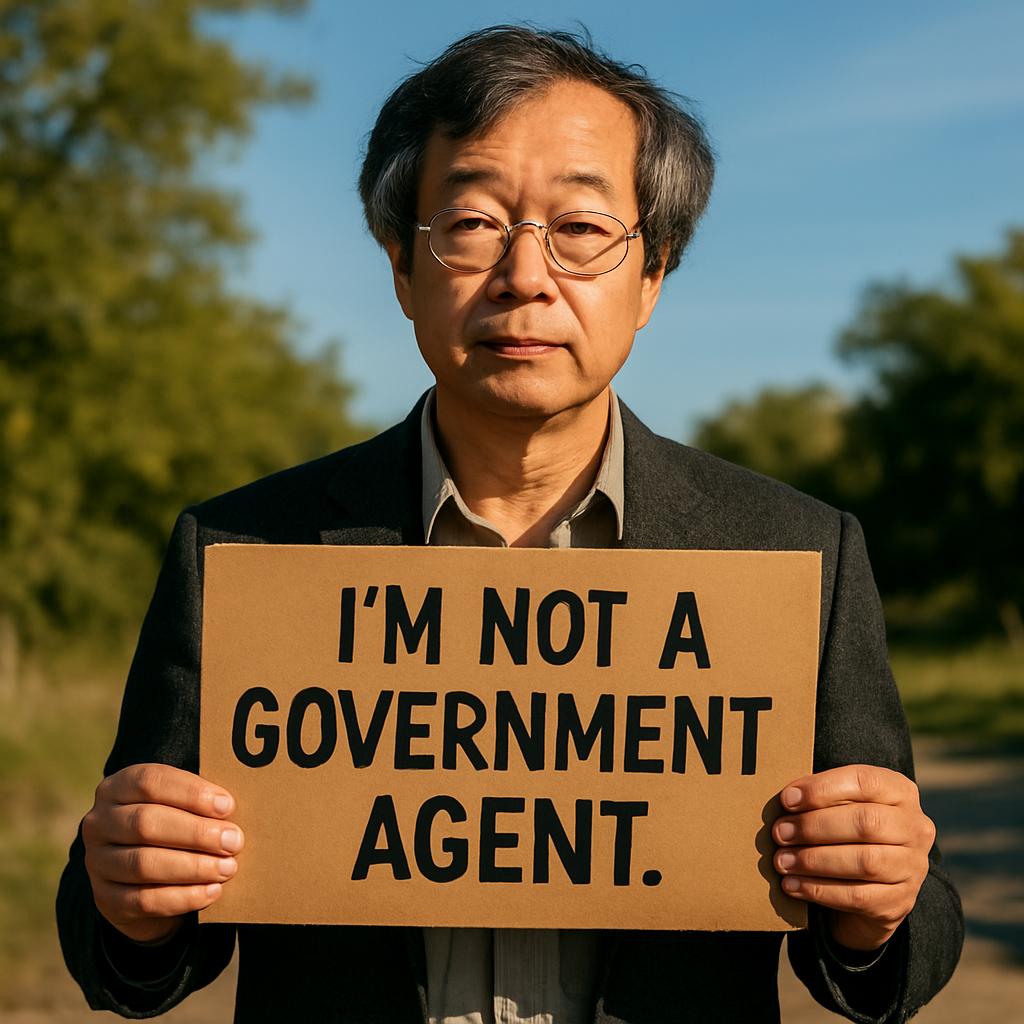
Satoshi’s Quote: I’m not a government agent
Table of contents
- What does Satoshi’s quote “I’m not a government agent” reveal about Bitcoin’s origins?
- How does Satoshi’s denial of government ties impact Bitcoin’s decentralization?
- Why is Satoshi’s identity and statement important for Bitcoin’s trustworthiness?
- How has Satoshi’s quote influenced Bitcoin’s adoption and perception worldwide?
- What lessons can developers and crypto enthusiasts learn from Satoshi’s statement?
- Frequently Asked Questions
Satoshi Nakamoto’s identity remains one of the greatest mysteries in the world of cryptocurrency. Among the many messages and forum posts left behind, one quote stands out: “I’m not a government agent.” This simple statement has sparked countless theories and discussions about Satoshi’s true motives, origins, and the implications for Bitcoin’s decentralized ethos. Understanding the depth of this quote helps shed light on the philosophy embedded in Bitcoin’s creation and its ongoing impact on the crypto ecosystem.
What does Satoshi’s quote “I’m not a government agent” reveal about Bitcoin’s origins?
The quote “I’m not a government agent” emphasizes Satoshi’s clear distancing from any official or governmental affiliation. Bitcoin was introduced as an open-source, peer-to-peer electronic cash system, designed to operate independently from centralized authorities.
Key points from this quote’s context include:
- A declaration of independence from state-controlled monetary systems.
- Reinforcing the decentralized nature of Bitcoin, free from government oversight.
- Suggesting that Bitcoin’s motivations were rooted in privacy, autonomy, and individual empowerment rather than political agendas.
This statement helps clarify that Bitcoin was intended as an alternative to traditional, government-backed currencies, aiming to avoid the pitfalls of centralized control like inflation and censorship.
How does Satoshi’s denial of government ties impact Bitcoin’s decentralization?
Satoshi’s explicit denial of being a government agent adds credibility to Bitcoin’s decentralized framework. Decentralization means no single authority governs the network, and this quote aligns with that principle by distancing Bitcoin’s creator from any centralized power.
The impact includes:
- Building trust within the community that Bitcoin is not a tool for government surveillance or control.
- Encouraging open participation in mining, development, and usage without fear of government interference.
- Supporting Bitcoin’s resilience against censorship, as it is designed to operate without reliance on any government infrastructure.
Bitcoin’s network architecture is peer-to-peer, with consensus achieved through a distributed ledger. Satoshi’s statement strengthens the narrative that Bitcoin is a grassroots innovation, not a top-down implementation.
Why is Satoshi’s identity and statement important for Bitcoin’s trustworthiness?
The mystery around Satoshi’s identity fuels curiosity, but the quote “I’m not a government agent” offers reassurance that Bitcoin was created with an independent vision. Trust in cryptocurrencies often depends on the perceived motivations of their creators.
This statement:
- Reduces suspicion that Bitcoin is a surveillance tool or a government experiment.
- Helps users feel more confident in the system’s impartiality and fairness.
- Highlights the ethos of privacy and autonomy, core values that attract many to Bitcoin.
While anonymity raises questions, this quote serves as a reminder that Bitcoin’s design and operation are meant to be transparent and community-driven, rather than manipulated by hidden agendas.
How has Satoshi’s quote influenced Bitcoin’s adoption and perception worldwide?
Bitcoin’s rise has been accompanied by debates about regulation, legitimacy, and security. Satoshi’s quote has influenced public perception by framing Bitcoin as a technology designed to exist outside traditional government control.
Influences include:
- Attracting libertarians, privacy advocates, and people skeptical of central banks.
- Inspiring other decentralized projects and Layer 2 solutions on Bitcoin’s network.
- Fueling discussions around financial sovereignty and the future of money.
Regulators have taken varied stances on Bitcoin, but the clear message from Satoshi’s quote continues to resonate with those who view Bitcoin as a tool for financial freedom.
What lessons can developers and crypto enthusiasts learn from Satoshi’s statement?
Satoshi’s insistence on not being a government agent teaches important lessons for anyone involved in cryptocurrency development or advocacy.
Key takeaways include:
- Maintain transparency and independence to build user trust.
- Design systems that resist censorship and centralized control.
- Prioritize user privacy and autonomy in protocol development.
- Foster open-source collaboration rather than closed, proprietary control.
This philosophy encourages innovation that empowers individuals, supports decentralized governance, and challenges traditional financial paradigms.
Frequently Asked Questions
Why did Satoshi say “I’m not a government agent”?
Satoshi wanted to clarify that Bitcoin was not a government project or surveillance tool. This statement helps emphasize that Bitcoin was created independently to provide a decentralized alternative to traditional financial systems.
Does Satoshi’s anonymity affect Bitcoin’s credibility?
While anonymity sparks speculation, Bitcoin’s credibility relies more on its transparent code and network security than on its creator’s identity. The statement distancing Satoshi from government ties reinforces Bitcoin’s decentralized and impartial nature.
How does Satoshi’s statement impact Bitcoin regulation?
Regulators often consider Bitcoin’s decentralized, non-government origins when crafting policies. Satoshi’s quote highlights Bitcoin’s intent to operate outside government control, which complicates regulatory enforcement but also underscores its innovative potential.
Can we trust Bitcoin because Satoshi claimed not to be a government agent?
Trust in Bitcoin arises from its decentralized design, cryptographic security, and community governance. Satoshi’s statement supports this trust by underscoring that Bitcoin was not designed as a government-controlled system, promoting user confidence in its independence.