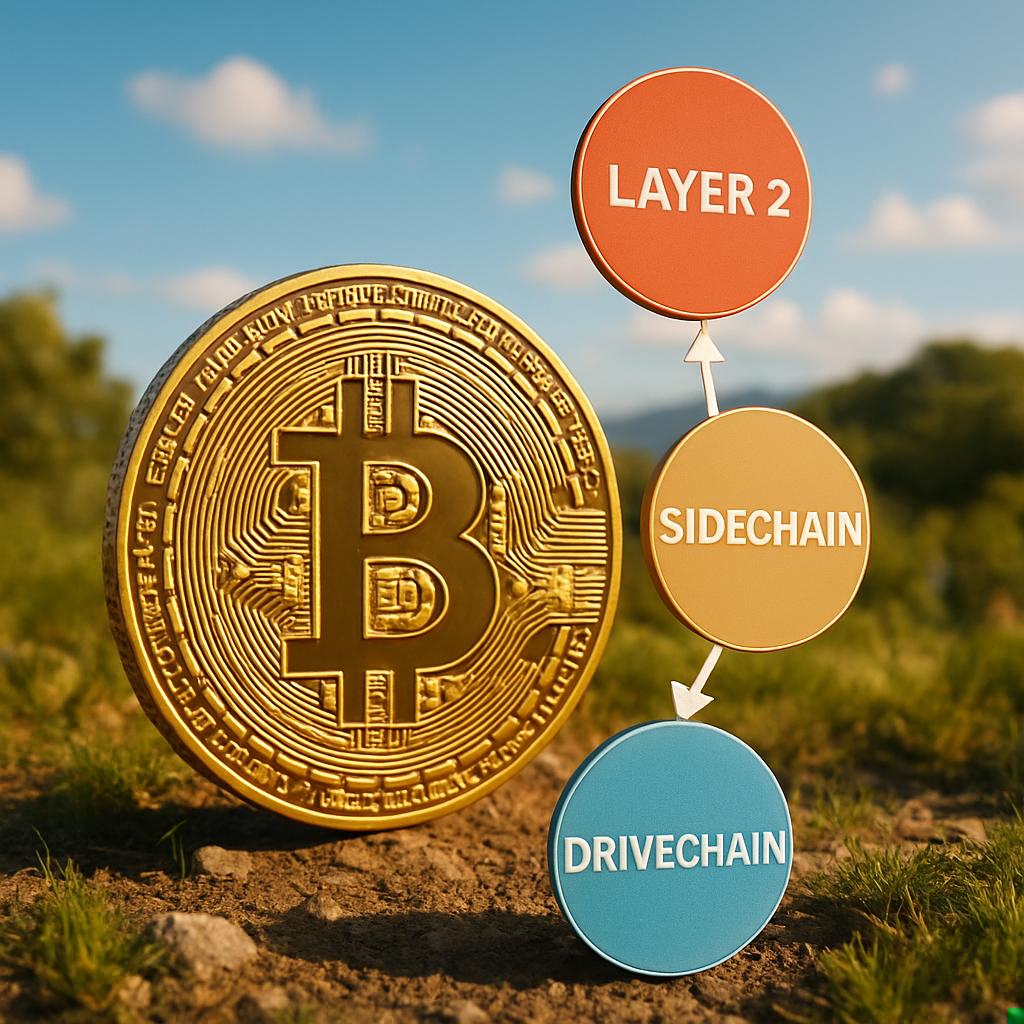
The Evolution of Bitcoin with Layer 2: Sidechains, Drivechains, and Beyond
Table of contents
- What are Bitcoin Layer 2 solutions and why do they matter?
- How do sidechains work as a Bitcoin Layer 2 scaling method?
- What is a drivechain and how does it improve Bitcoin’s capabilities?
- How does the Lightning Network fit into Bitcoin’s Layer 2 ecosystem?
- What future developments are shaping Bitcoin Layer 2 beyond sidechains and drivechains?
- Frequently Asked Questions
Bitcoin’s journey as the pioneer of decentralized digital money has been marked by constant innovation to improve its scalability, security, and utility. While Bitcoin’s base layer provides unmatched decentralization and security, its transaction throughput and speed face natural limitations. Layer 2 solutions have emerged as powerful tools to address these challenges, enabling faster and cheaper transactions while preserving the core network’s integrity. Exploring how sidechains, drivechains, and other Layer 2 technologies have shaped Bitcoin’s evolution reveals the dynamic path toward a more scalable and versatile Bitcoin ecosystem.
What are Bitcoin Layer 2 solutions and why do they matter?
Bitcoin Layer 2 refers to protocols built on top of the Bitcoin blockchain to increase transaction capacity and add new functionalities without altering the base layer’s consensus rules. These solutions aim to solve Bitcoin’s scalability bottlenecks by moving some transaction activity off-chain or to supplemental chains linked to Bitcoin.
Key reasons why Layer 2 matters for Bitcoin include:
- Higher transaction throughput: Layer 2 can process thousands of transactions per second compared to Bitcoin’s roughly 7 TPS on-chain limit.
- Lower fees: Off-chain or sidechain transactions avoid on-chain congestion costs, making microtransactions and frequent transfers affordable.
- Enhanced privacy: Layer 2 solutions can offer better transaction privacy by reducing on-chain traceability.
- New functionalities: Custom tokens, smart contracts, and interoperability become possible without modifying Bitcoin’s base protocol.
Popular Layer 2 types for Bitcoin include sidechains, drivechains, payment channels (e.g., the Lightning Network), and statechains, all contributing to a more flexible and scalable Bitcoin network.
How do sidechains work as a Bitcoin Layer 2 scaling method?
Sidechains are independent blockchains pegged to Bitcoin through a two-way peg mechanism. This means bitcoins can be transferred from the main Bitcoin blockchain to the sidechain and back at a fixed rate. Sidechains operate with their own consensus rules and can support different features or faster block times.
How sidechains function:
- Locking BTC on main chain: Bitcoins are sent to a special address on the Bitcoin blockchain, effectively locking them.
- Issuing tokens on the sidechain: Equivalent tokens representing the locked BTC are issued on the sidechain.
- Transacting on the sidechain: Users can transact with the pegged tokens on the sidechain, benefiting from faster confirmations or enhanced features.
- Redeeming BTC: Users can convert sidechain tokens back to BTC by reversing the process, unlocking the original bitcoins on the main chain.
Advantages of sidechains include:
- Flexibility to experiment with new rules and features without risking mainnet security.
- Increased transaction speeds and lower fees.
- Ability to create specialized chains optimized for gaming, privacy, or DeFi.
Notable sidechains in the Bitcoin ecosystem are Liquid Network and RSK, both enabling faster transactions and smart contracts on Bitcoin.
What is a drivechain and how does it improve Bitcoin’s capabilities?
Drivechains extend the sidechain concept with a focus on decentralized and trust-minimized interoperability with Bitcoin. They allow Bitcoin miners to enforce sidechain consensus and transfers, creating a secure bridge between chains.
Drivechain’s distinguishing features:
- Two-way peg secured by miners: Miners monitor sidechain activity and authorize BTC transfers in and out, reducing reliance on trusted federations.
- Decentralized sidechain validation: Sidechain rules can be modified by miners voting, promoting adaptability.
- Permissionless sidechain creation: Anyone can propose and implement new sidechains, fostering innovation.
Drivechains aim to empower Bitcoin with additional functionalities such as:
- Privacy enhancements through confidential transactions.
- Support for alternative consensus algorithms.
- Experimentation with new token standards and smart contracts.
The drivechain concept remains under development but promises a powerful tool for expanding Bitcoin’s utility without compromising its security.
How does the Lightning Network fit into Bitcoin’s Layer 2 ecosystem?
The Lightning Network is a Layer 2 payment protocol enabling instant, low-cost Bitcoin transactions through off-chain payment channels between users.
How Lightning Network operates:
- Users open a payment channel by locking BTC in a multisignature address on-chain.
- Within the channel, participants exchange signed transactions updating the balance but not broadcasting each move to the blockchain.
- Channels can be linked to route payments across the network.
- When the channel closes, the final balance is settled on-chain.
Lightning Network benefits include:
- Micropayments and frequent transactions at near-zero fees.
- Instant settlement with minimal blockchain interaction.
- Reduced blockchain congestion by moving many transactions off-chain.
The Lightning Network complements sidechains and drivechains by focusing on rapid payments rather than full blockchain functionality.
What future developments are shaping Bitcoin Layer 2 beyond sidechains and drivechains?
Bitcoin’s Layer 2 landscape continues evolving with innovations that expand scalability and use cases:
- Statechains: Allow users to transfer ownership of UTXOs off-chain, enhancing privacy and enabling novel asset transfers.
- Taproot and Schnorr signatures: Bitcoin protocol upgrades improving smart contract efficiency and privacy, benefiting Layer 2 protocols.
- Cross-chain interoperability protocols: Linking Bitcoin with other blockchains to enable asset swaps and DeFi participation.
- Improved sidechain bridges: Advancements in trust-minimized peg designs to enhance security and usability.
These developments work together to create a multi-layered Bitcoin ecosystem where the base layer remains solid and secure, while Layer 2 solutions provide speed, flexibility, and new financial primitives.
Frequently Asked Questions
What is the difference between a Bitcoin sidechain and drivechain?
A sidechain is an independent blockchain pegged to Bitcoin, often secured by federations or other mechanisms. A drivechain extends this by using Bitcoin miners to secure the two-way peg and sidechain consensus, aiming for a more decentralized and trust-minimized approach.
Can I use Bitcoin directly on sidechains like Liquid or RSK?
Bitcoin must be locked on the main chain to receive equivalent tokens on the sidechain. Users transact with these pegged tokens on the sidechain and can redeem them back to Bitcoin by unlocking the original coins on the main chain.
How does the Lightning Network reduce Bitcoin transaction fees?
The Lightning Network moves many transactions off-chain by creating payment channels where users exchange signed balance updates without broadcasting each transaction on Bitcoin’s blockchain, significantly lowering fees and speeding up payments.
Are Layer 2 solutions safe to use with Bitcoin?
Layer 2 solutions rely on the security of the Bitcoin base layer but introduce additional trust assumptions depending on the design. Payment channels like Lightning are considered secure, while sidechains and drivechains require trust in their specific pegging mechanisms and consensus rules. Users should understand the risks before using these technologies.