The First Bitcoin Block: The Genesis Block’s Hidden Message
Table of contents
The inception of Bitcoin marked a pivotal moment in financial history, introducing a decentralized digital currency that operates without intermediaries. At the heart of this revolutionary system lies the very first Bitcoin block, known as the Genesis Block. This block isn’t just the starting point of the Bitcoin blockchain; it carries a hidden message that has intrigued enthusiasts, developers, and historians alike. Exploring the Genesis Block’s mystery offers insight into Bitcoin’s origins and the vision of its creator.
What Is the Genesis Block in Bitcoin?
The Genesis Block refers to the very first block of the Bitcoin blockchain, mined by Bitcoin’s pseudonymous creator, Satoshi Nakamoto, on January 3, 2009. It serves as the foundation from which all subsequent Bitcoin transactions and blocks are built.
Unlike other blocks that reference the previous block’s hash, the Genesis Block is unique because it has no predecessor. This block contains the initial 50 bitcoins, which are unspendable due to the way it was programmed. The creation of the Genesis Block marked the launch of Bitcoin’s decentralized ledger.
Key Features of the Genesis Block:
- Block Height: 0 (the very first block)
- Timestamp: January 3, 2009
- Reward: 50 bitcoins (unspendable)
- Previous Hash: All zeros (no preceding block)
- Contains a hidden message in its coinbase
What Is the Hidden Message in the Bitcoin Genesis Block?
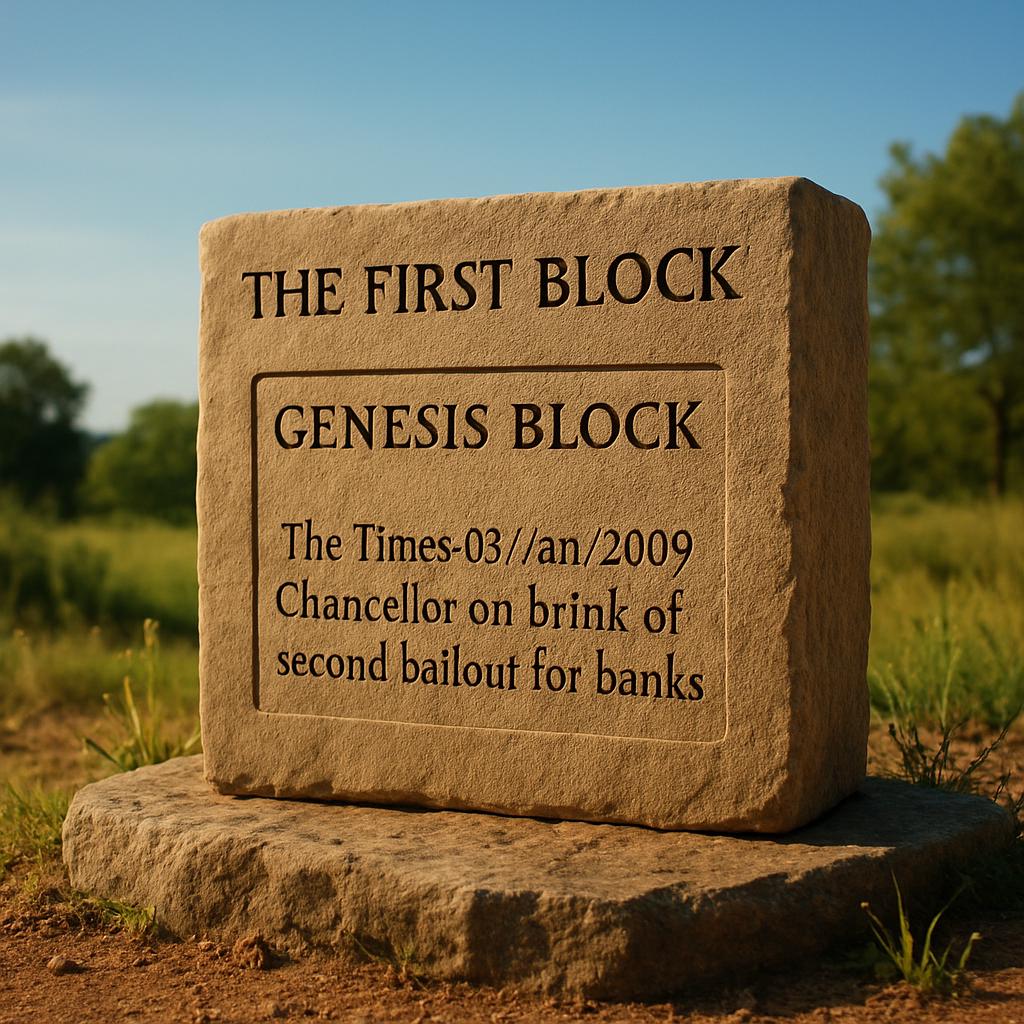
Embedded within the coinbase parameter of the Genesis Block is a cryptic text string that caught the attention of many early adopters. The message reads:
“The Times 03/Jan/2009 Chancellor on brink of second bailout for banks”
This text is the headline from the front page of The Times newspaper published on the same day the block was mined. It serves as a timestamp and a political statement.
Reasons for the Hidden Message:
- Proof of block creation date: This message anchors the block’s creation to a specific real-world date.
- Commentary on traditional banking: It highlights the financial crisis and government bailouts occurring at the time.
- Symbol of Bitcoin’s purpose: The message underscores Bitcoin’s aim to offer an alternative to centralized financial systems.
How Does the Hidden Message Reflect Bitcoin’s Philosophy?
The message in the Genesis Block carries symbolic weight beyond a simple timestamp. It draws attention to the instability and perceived failures of the traditional banking system during the 2008 financial crisis. The phrase “Chancellor on brink of second bailout for banks” signals the urgency and scale of government intervention.
Bitcoin was designed to operate without reliance on central banks or governments, providing a peer-to-peer electronic cash system immune to such bailouts or inflationary policies. This embedded headline serves as a subtle critique and a mission statement, emphasizing transparency, decentralization, and financial sovereignty.
Why Is the Genesis Block Reward Unspendable?
The 50 bitcoins awarded for mining the Genesis Block cannot be spent or transferred. This is due to the way the block was coded in the Bitcoin software. The coinbase transaction of the Genesis Block does not have a valid input, making its reward permanently locked.
This unspendability has several implications:
- Prevents double counting: Ensures the initial block is purely symbolic and foundational.
- Maintains blockchain integrity: Avoids potential conflicts with future transactions.
- Preserves historical significance: Acts as a fixed point in Bitcoin’s ledger.
How Has the Genesis Block Influenced Bitcoin’s Development?
The Genesis Block set the stage for Bitcoin’s subsequent growth and evolution. It established core principles that remain central to the network today:
- Transparency through immutability: Every block links to its predecessor, ensuring data integrity.
- Decentralization: Mining rewards distributed fairly starting from block 1.
- Trustless consensus: No central authority controls the ledger, relying on cryptographic proof.
The hidden message also inspired a culture of openness and awareness within the Bitcoin community. It reminds users why Bitcoin was created and what challenges it seeks to address.
Frequently Asked Questions
What is the significance of the Genesis Block’s hidden message?
The hidden message serves as a timestamp and political commentary, highlighting the financial crisis and government bailouts in 2009, while emphasizing Bitcoin’s purpose as a decentralized alternative to traditional banking.
Can the bitcoins in the Genesis Block be spent?
No, the 50 bitcoins generated in the Genesis Block are unspendable due to the unique way the block was coded, making them permanently locked and symbolic.
Why did Satoshi Nakamoto include a newspaper headline in the Genesis Block?
Including the newspaper headline provided a real-world timestamp for the block’s creation and conveyed a critique of the banking system’s instability during the 2008 financial crisis.
How does the Genesis Block differ from other Bitcoin blocks?
The Genesis Block is unique because it has no previous block reference, contains an unspendable reward, and includes a hidden message that sets the tone for Bitcoin’s mission and philosophy.