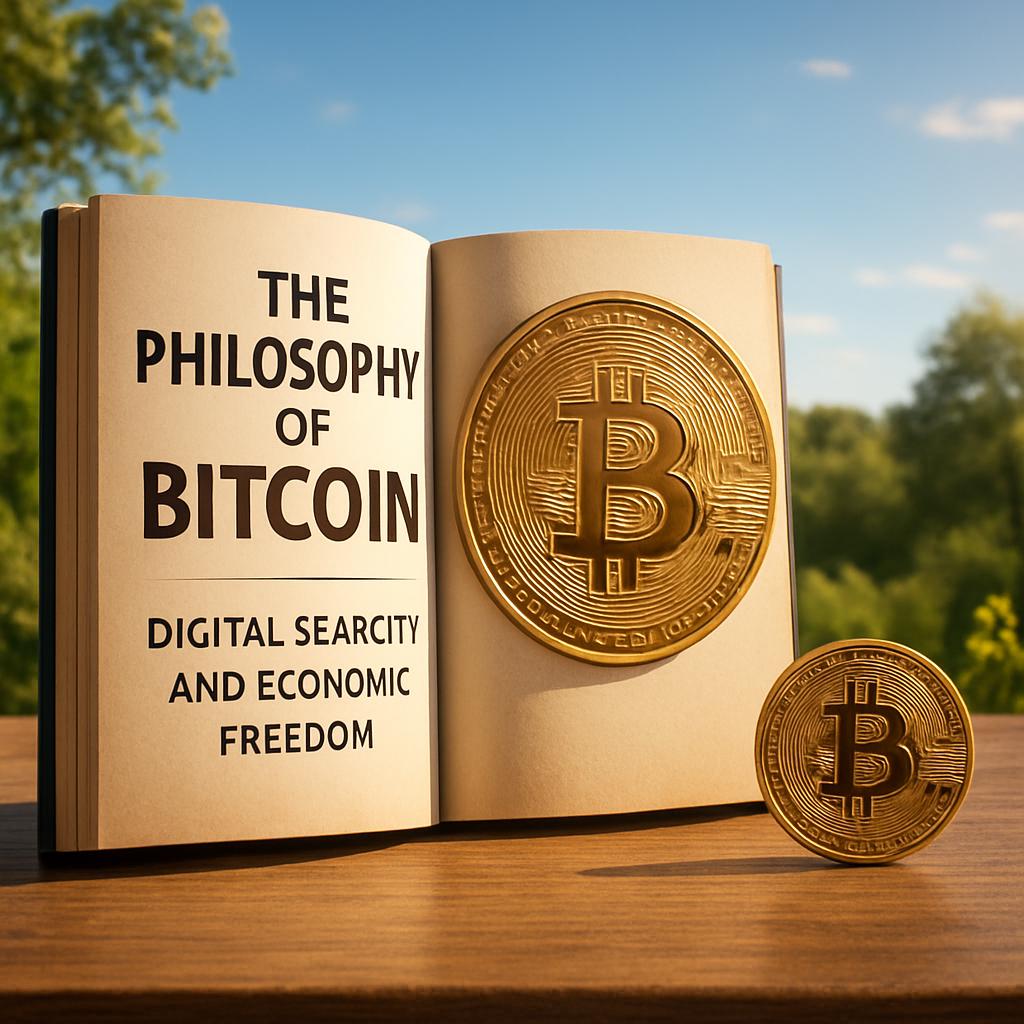
The Philosophy of Bitcoin: Digital Scarcity and Economic Freedom
Table of contents
- What is digital scarcity in Bitcoin and why does it matter?
- How does Bitcoin promote economic freedom?
- What philosophical ideas underpin Bitcoin’s design?
- How does Bitcoin’s digital scarcity compare to traditional money?
- What are the economic implications of Bitcoin’s philosophy?
- Frequently Asked Questions
Bitcoin has sparked a profound shift in how people think about money, value, and freedom. At the heart of its design lies a philosophy that challenges traditional monetary systems by introducing digital scarcity and enabling economic autonomy. Understanding these core ideas reveals why Bitcoin is more than just a digital currency—it represents a new framework for wealth preservation and financial sovereignty in an increasingly digital world.
What is digital scarcity in Bitcoin and why does it matter?
Digital scarcity refers to the limited availability of a resource in a digital form, something that was once thought impossible since digital files can be copied endlessly. Bitcoin solves this problem through a fixed supply capped at 21 million coins. This limit is enforced by the Bitcoin protocol and cannot be changed without consensus from the network participants.
The importance of digital scarcity lies in how it mirrors the scarcity of precious metals like gold but with unique digital advantages:
- Predictable supply curve: Bitcoin’s issuance halves roughly every four years, making it deflationary by design.
- Immutable supply cap: No central authority can inflate the supply, protecting against currency debasement.
- Digital transferability: Bitcoin can be sent globally in minutes without intermediaries.
- Verifiable scarcity: Anyone can audit the blockchain to confirm total supply and transactions.
This scarcity makes Bitcoin a potential store of value that is resistant to inflation and censorship, qualities that appeal to those seeking economic stability and independence.
How does Bitcoin promote economic freedom?
Economic freedom means having control over one’s own money and financial decisions without interference or restrictions. Bitcoin’s decentralized nature promotes this by removing reliance on centralized institutions such as banks or governments.
Key ways Bitcoin supports economic freedom include:
- Permissionless access: Anyone with an internet connection can send or receive Bitcoin without approval.
- Self-custody of funds: Users hold their private keys, giving them full control over their assets.
- Censorship resistance: Transactions cannot be blocked or reversed by third parties.
- Global inclusion: Bitcoin provides financial services to unbanked or underbanked populations worldwide.
- Transparent and open: The public ledger fosters trust through openness rather than opaque trust in intermediaries.
These attributes empower individuals to safeguard their wealth, transact freely, and participate in a global economy without barriers imposed by traditional financial systems.
What philosophical ideas underpin Bitcoin’s design?
Bitcoin’s architecture reflects several philosophical concepts about money, trust, and freedom:
- Sound money: Bitcoin embodies principles of sound money—durability, divisibility, portability, and scarcity—offering a reliable medium of exchange and store of value.
- Trustlessness: The system operates without requiring trust in any single party, relying instead on cryptography and consensus rules.
- Decentralization: Power is distributed across many nodes, preventing control or manipulation by centralized authorities.
- Individual sovereignty: Users are the ultimate authority over their own funds, reinforcing autonomy.
- Transparency and verifiability: Open-source code and public blockchain allow anyone to verify transactions, fostering accountability.
These ideas challenge conventional monetary paradigms where government-issued fiat currencies can be inflated or manipulated without transparency.
How does Bitcoin’s digital scarcity compare to traditional money?
Traditional fiat currencies are subject to inflation because central banks can increase supply at will. This often leads to loss of purchasing power over time. In contrast, Bitcoin’s digital scarcity is hardcoded and predictable, offering a hedge against inflation.
Comparison points include:
- Inflation risk: Fiat currencies have no fixed supply; Bitcoin supply is capped.
- Monetary policy: Central banks can adjust interest rates and money supply; Bitcoin relies on algorithmic issuance.
- Store of value: Gold and real estate are scarce but often less accessible; Bitcoin is divisible and easily transferable.
- Transparency: Fiat systems are opaque; Bitcoin’s ledger is public and auditable.
While Bitcoin’s price can be volatile due to market dynamics, its fixed supply makes it a unique asset that challenges inflationary monetary models.
What are the economic implications of Bitcoin’s philosophy?
Bitcoin’s philosophy has broad implications for how economies function and how wealth is preserved:
- Decentralized monetary policy: Removes control from governments, reducing risks of hyperinflation or political manipulation.
- Wealth preservation: Individuals can protect assets from confiscation or devaluation.
- Financial inclusion: Provides access to financial tools for underserved populations.
- Shift in power dynamics: Empowers individuals over centralized institutions.
- Innovation in finance: Enables new models such as decentralized finance (DeFi) built on Bitcoin’s principles.
This philosophical shift suggests a future where money is more transparent, accessible, and resistant to censorship, with profound effects on global economic structures.
Frequently Asked Questions
What does digital scarcity mean in Bitcoin?
Digital scarcity in Bitcoin means its total supply is limited to 21 million coins, creating a finite digital asset that cannot be duplicated or inflated like traditional digital money.
How does Bitcoin ensure economic freedom for users?
Bitcoin provides economic freedom by allowing anyone to control their own funds without relying on banks or governments, enabling censorship-resistant and permissionless transactions worldwide.
Why is Bitcoin considered sound money?
Bitcoin is considered sound money because it is durable, divisible, portable, scarce, and has a predictable supply schedule, making it a reliable store of value over time.
How does Bitcoin’s philosophy affect global financial systems?
Bitcoin’s philosophy promotes decentralization and trustlessness, challenging traditional centralized monetary systems and potentially reshaping global finance by empowering individuals and increasing transparency.